Overview
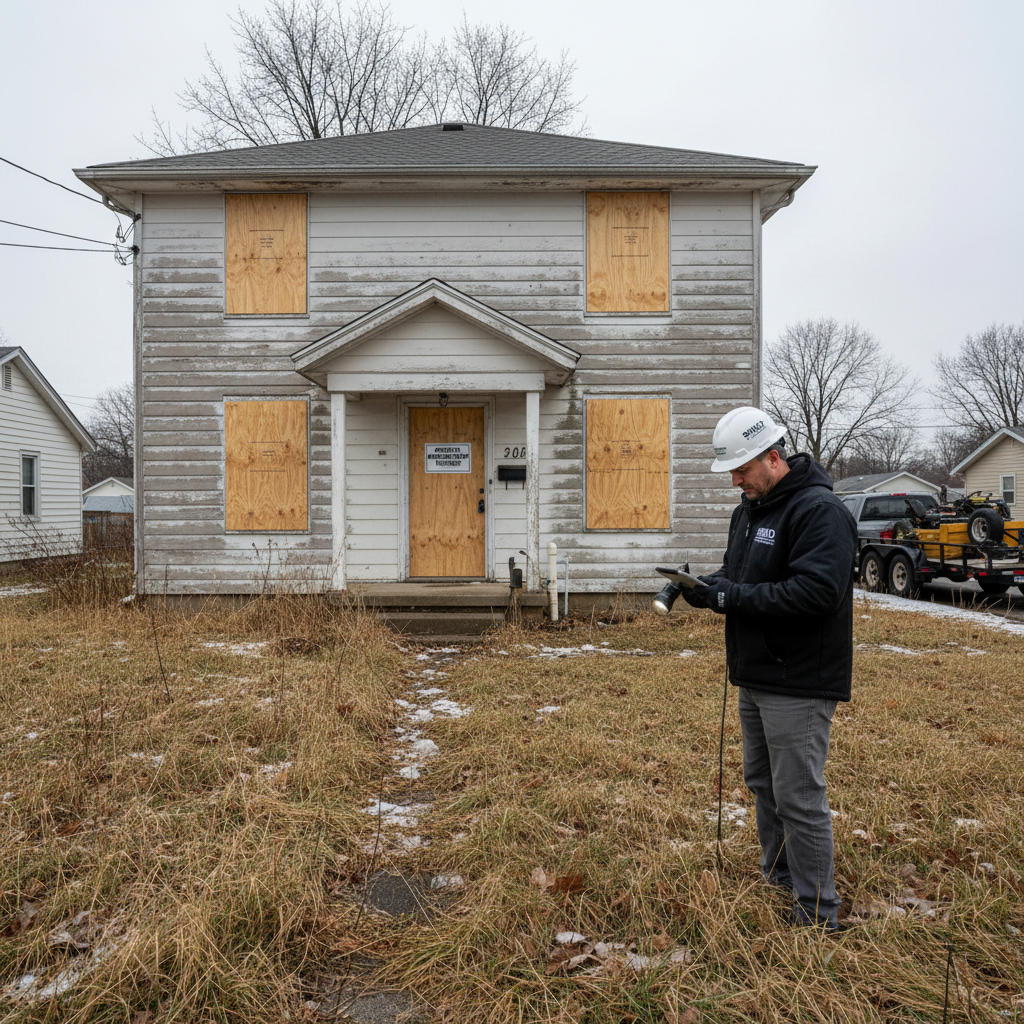
Auxi Services provides comprehensive property preservation services for vacant and REO properties nationwide. From initial securing and board-ups to winterization, lawn maintenance, and ongoing inspections, we protect asset value for lenders, servicers, and institutional real estate owners.
What's Included
What Is Property Preservation?
Property preservation is the comprehensive maintenance, securing, and protection of vacant or bank-owned real estate. When a property becomes vacant — whether through foreclosure, abandonment, eviction, or transition between owners — it must be secured and maintained to prevent deterioration, code violations, and liability. Property preservation encompasses initial securing (lock changes, board-ups), winterization of vulnerable systems, ongoing lawn and exterior maintenance, interior debris removal, and regular inspections with photo documentation. For lenders, loan servicers, and institutional real estate owners, property preservation is not optional — FHA, VA, Fannie Mae, and Freddie Mac all require specific preservation standards to protect collateral value and comply with investor guidelines.
Our Property Preservation Process
Auxi follows a structured, compliance-driven process for every property we preserve. From initial securing to ongoing maintenance, every step is tracked in our platform with photo documentation and real-time reporting.
- 1. Property Assessment — Full condition inspection with timestamped photos
- 2. Initial Securing — Lock changes, board-ups, and securing of all entry points
- 3. Winterization — Plumbing, HVAC, and sprinkler winterization per investor guidelines
- 4. Trash-Out & Debris Removal — Complete interior and exterior clean-out
- 5. Ongoing Maintenance — Lawn care, snow removal, and seasonal services
- 6. Regular Inspections — Scheduled condition reports with photo documentation
- 7. Compliance Reporting — Full documentation package for servicers and asset managers
Who We Serve
Auxi provides property preservation services for organizations managing vacant and REO property portfolios. Our platform is designed for the unique compliance, reporting, and scale requirements of institutional clients.
- Lenders & loan servicers managing REO inventory
- Institutional real estate owners and investors
- Asset management companies
- Government & HUD-affiliated properties
- Property management companies with vacant units
- REITs and portfolio holders
Property Preservation Cost Factors
Pricing for property preservation varies based on property size, condition, scope of work, and urgency. Initial securing and winterization typically range from $300–$1,500. Trash-out services range from $500–$2,500 depending on debris volume. Ongoing maintenance (lawn care, inspections) is billed monthly, usually $100–$400 per property. Auxi provides transparent, line-itemized pricing for every task — no hidden fees. Clients pay only for work performed, with full photo documentation before and after each service.
FHA & VA Compliance Requirements
Property preservation is governed by strict investor and government guidelines. Auxi ensures full compliance with all major preservation standards. Our vendors are trained on current requirements and we provide the documentation servicers need to satisfy auditor and investor reviews.
- FHA securing and winterization guidelines
- VA property preservation requirements
- Fannie Mae preservation standards
- Freddie Mac servicing requirements
- Local code violation remediation
- Insurance documentation and reporting
Auxi vs. Traditional Contractors
How our integrated facility operations model compares to managing individual contractors.
| Category | Auxi Integrated Model | Traditional Single-Contractor |
|---|---|---|
| Vendor Coordination | Single point of contact manages all trades | You manage each contractor separately |
| Emergency Response | 24/7 dispatch with coordinated rapid mobilization | Scramble to find available contractors |
| Scheduling & Logistics | Integrated scheduling across all scopes | Multiple schedules to track & reconcile |
| Work Order Management | Centralized digital tracking & documentation | Fragmented across vendors and inboxes |
| Accountability | One partner owns scope, quality, and outcomes | Blame-shifting between contractors |
| Reporting | Unified operational reporting & status updates | Disconnected or no structured reporting |
| Scalability | Scales from single property to large portfolio | Rebuild vendor lists for every new site |
| Cost Predictability | Structured pricing, packages, and proposals | Variable bids from multiple vendors |
| Compliance & Docs | Insurance, licensing, and W-9s maintained | Must collect and verify from each vendor |
| Recurring Maintenance | Preventive programs built into operations | Reactive — issues found after damage occurs |
Auxi
Single point of contact manages all trades
Traditional
You manage each contractor separately
Auxi
24/7 dispatch with coordinated rapid mobilization
Traditional
Scramble to find available contractors
Auxi
Integrated scheduling across all scopes
Traditional
Multiple schedules to track & reconcile
Auxi
Centralized digital tracking & documentation
Traditional
Fragmented across vendors and inboxes
Auxi
One partner owns scope, quality, and outcomes
Traditional
Blame-shifting between contractors
Auxi
Unified operational reporting & status updates
Traditional
Disconnected or no structured reporting
Auxi
Scales from single property to large portfolio
Traditional
Rebuild vendor lists for every new site
Auxi
Structured pricing, packages, and proposals
Traditional
Variable bids from multiple vendors
Auxi
Insurance, licensing, and W-9s maintained
Traditional
Must collect and verify from each vendor
Auxi
Preventive programs built into operations
Traditional
Reactive — issues found after damage occurs
Related Searches
Request This Service
Get a detailed estimate within 24 hours.
Property Preservation Services — FAQs
Common questions about our services, pricing, and process.
Related Services
Service Locations
Property Preservation Services Available Nationwide
Available in 54+ metro areas across the United States