120-Unit Vacant Housing Preservation and Code Compliance
120
Units Serviced
60 days to full code compliance
Time Saved
$680,000
Cost Savings
🔧 The Challenge
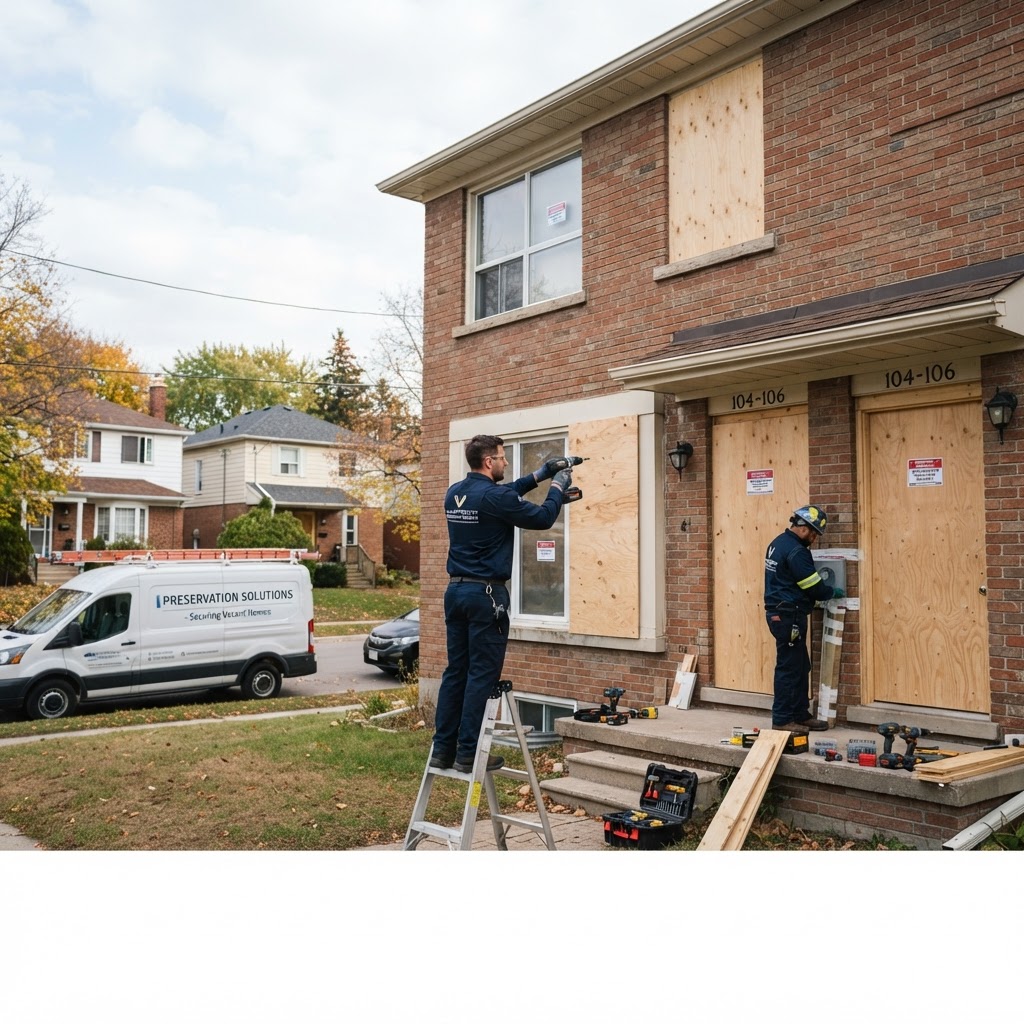
A municipal housing authority faced severe code violations across 120 vacant public housing units. Properties had been vacant 6-18 months with no preservation, resulting in extensive vandalism, mold growth, frozen pipe damage, and 47 active code violation notices from the city. The housing authority faced $5,000/day in accumulating fines and potential loss of federal funding.
💡 Our Solution
Auxi deployed 8 crews simultaneously to address the 120 units. Priority was given to the 47 units with active code violations. Within 30 days, all units were secured, trash-out completed, mold remediated, and winterized. Auxi then implemented monthly inspections and ongoing maintenance to prevent future violations. A dedicated compliance manager coordinated with city inspectors to resolve all open violations.
✅ The Outcome
All 120 units were secured, cleaned, and winterized within 30 days. Code violations were resolved within 60 days. Federal funding eligibility was restored. The housing authority avoided $680,000 in fines and penalty exposure.
Project Photos
"Auxi didn't just clean up our properties — they restored our credibility with the city and federal regulators. Their compliance documentation was flawless."
— Executive Director, Municipal Housing Authority
Project Details
AI-Powered Analysis
Our AI analyzed this project's results to surface key takeaways and actionable recommendations.
Eliminating Massive Regulatory Fines and Penalties
By deploying a swift multi-crew strategy, we prevented the accumulation of $5,000 daily fines. This intervention effectively neutralized $680,000 in potential financial liability while preserving critical federal funding eligibility.
Accelerating Code Compliance Through Concurrent Deployment
Our synchronized 8-crew approach enabled the immediate stabilization of 120 units within just 30 days. This rapid mobilization was instrumental in resolving all active code violations 60 days ahead of the projected timeline.
Transitioning from Reactive Repair to Preventative Management
The case demonstrates that reactive crisis management is significantly more expensive than systematic maintenance. Clients should implement our recurring inspection cycles to proactively identify hazards and prevent the recurrence of costly municipal violations.
AI-generated analysis for reference only. Contact our team for a tailored operational assessment.
Case Study — FAQs
Common questions about this type of project.