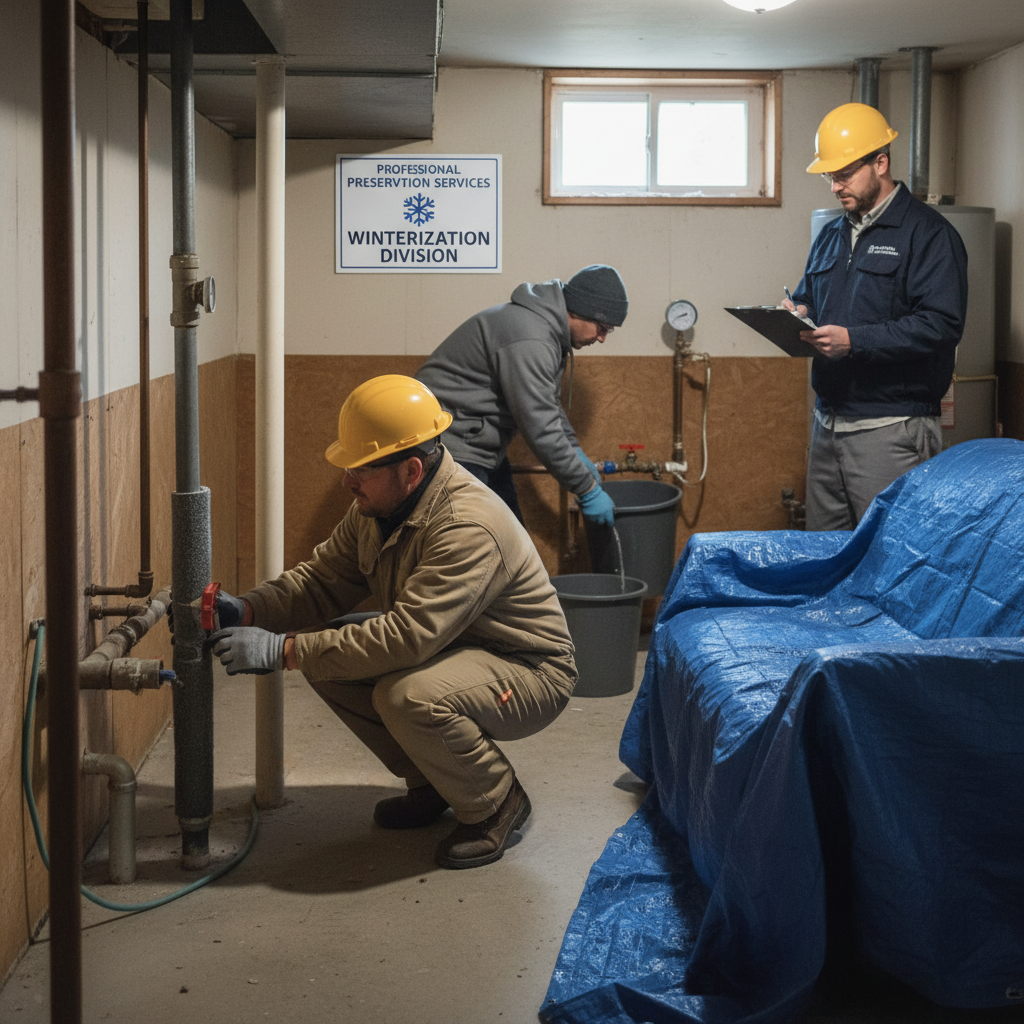
Winterization Services for Vacant Properties: A Complete Guide
Winterization is one of the most critical — and most commonly neglected — aspects of property preservation. When a property sits vacant through winter without proper winterization, the risk of catastrophic damage from frozen pipes, ice dams, and moisture intrusion skyrockets. A single burst pipe can cause $10,000-$50,000 in water damage, turning a manageable REO asset into a total loss.
What Is Property Winterization?
Winterization is the process of preparing a vacant property's plumbing, heating, and water systems to withstand freezing temperatures without damage. It involves draining water lines, adding antifreeze to traps, shutting off utilities, and protecting vulnerable systems.
There are two primary types of winterization:
Dry Winterization (Standard)
Used for properties where the heating system will be off and the property will be fully vacant through winter:
- Shut off water at the main
- Drain all plumbing lines using compressed air
- Add non-toxic antifreeze to all P-traps (sinks, tubs, toilets)
- Drain and winterize water heater
- Drain and winterize washing machine and dishwasher
- Add antifreeze to toilet bowls and tanks
- Winterize sprinkler/irrigation systems
- Post winterization notice on property
Wet Winterization (Limited)
Used when heating will be maintained to keep the property above freezing:
- Shut off water at the main
- Drain exterior pipes and hose bibs
- Add antifreeze to infrequently used traps
- Maintain heating at minimum 55°F
- Monitor temperature remotely
Why Winterization Is Non-Negotiable
The Cost of Frozen Pipes
When water freezes, it expands. In a pressurized plumbing system, this expansion can crack pipes, fittings, and fixtures. When the ice thaws, water pours from the compromised pipes — often going unnoticed in a vacant property for days or weeks.
Typical damage from a single burst pipe in a vacant property:
- Drywall damage: $3,000-$8,000 per floor
- Flooring replacement: $5,000-$15,000
- Mold remediation: $2,000-$10,000
- Electrical damage: $1,000-$5,000
- Structural damage (severe cases): $20,000+
Insurance and Compliance Requirements
Most property insurance policies require winterization for vacant properties. Failure to winterize can void coverage, leaving the owner fully liable for damage. Additionally, HUD, Fannie Mae, and Freddie Mac require winterization for all vacant properties in their portfolios during heating season.
Regulatory Requirements
Federal regulations define heating season as October 1 through March 31, though local conditions may extend this window. Properties in northern states may require winterization as early as September and as late as May.
The Winterization Process: Step by Step
1. Preparation
- Verify property is vacant and utilities are accessible
- Locate main water shut-off valve
- Identify all plumbing fixtures and their locations
- Check for existing damage or leaks
- Document pre-winterization condition with photos
2. Water System Shutdown
- Shut off water at the main valve
- Open all faucets to relieve pressure
- Flush all toilets to empty tanks
- Drain water heater (turn off power/gas first)
- Disconnect and drain washing machine hoses
- Drain dishwasher supply lines
3. Line Draining
- Use compressed air to blow out all water lines
- Start from the highest fixture and work down
- Open all drain valves
- Verify no water remains in lines
- Check exterior hose bibs and drain them
4. Antifreeze Application
- Add non-toxic (propylene glycol) antifreeze to:
- All sink P-traps (1-2 cups each)
- Bathtub and shower traps (1-2 cups each)
- Toilet bowls and tanks (1 quart each)
- Floor drains (1-2 cups each)
- Use only RV/marine grade antifreeze — never automotive antifreeze
5. Heating System
- For dry winterization: shut off and winterize heating system
- For wet winterization: set thermostat to 55°F minimum
- Drain boiler systems if applicable
- Add antifreeze to hydronic systems if applicable
6. Exterior Systems
- winterize and drain sprinkler/irrigation systems
- Disconnect and store hoses
- Drain exterior faucets and install covers
- winterize pool equipment if applicable
- Clear gutters to prevent ice dams
7. Documentation
- Post winterization sticker at main water valve
- Post winterization notice on entry door
- Photo document all completed steps
- Record date, contractor, and property condition
- Store documentation in property file
Common Winterization Mistakes
- Incomplete line draining — Water left in low spots can still freeze and burst pipes
- Wrong antifreeze — Automotive antifreeze is toxic and can contaminate plumbing; always use RV/marine grade
- Missing fixtures — Forgetting to winterize toilets, washing machines, or dishwashers
- No documentation — Without proof of winterization, insurance claims may be denied
- No follow-up — Winterization can fail; properties need mid-winter inspections
- Ignoring exterior systems — Sprinkler systems and exterior pipes are often overlooked
Regional Considerations
Northern States (Zones 3-5)
- Full dry winterization required
- Heating season: September - May
- Mid-winter inspection recommended
- Exterior systems must be drained
Southern States (Zones 7-9)
- Wet winterization may suffice
- Heating season: November - March
- Focus on exterior pipes and hose bibs
- Pool equipment winterization important
Mountain States
- Full dry winterization required
- Extended heating season: September - June
- Additional attention to exterior systems
- Ice dam prevention critical
The Auxi Winterization Solution
Auxi Services provides professional winterization services nationwide with:
- Certified Technicians — Trained in proper winterization protocols
- Comprehensive Process — Every fixture, line, and trap is addressed
- Proper Materials — RV/marine grade antifreeze only
- Complete Documentation — Photos, stickers, and condition reports
- Mid-Winter Inspections — Scheduled check-ups to verify winterization integrity
- Emergency Response — 24/7 response if a property experiences a freeze event
- Compliance Reporting — HUD, Fannie Mae, and Freddie Mac compliant documentation
Conclusion
Winterization is not an optional service for vacant properties — it's essential risk management. The cost of professional winterization ($200-$500 per property) is negligible compared to the potential cost of freeze damage ($10,000-$50,000+).
Don't let freeze damage destroy your property value. Contact Auxi Services to schedule winterization for your vacant properties before the first freeze.