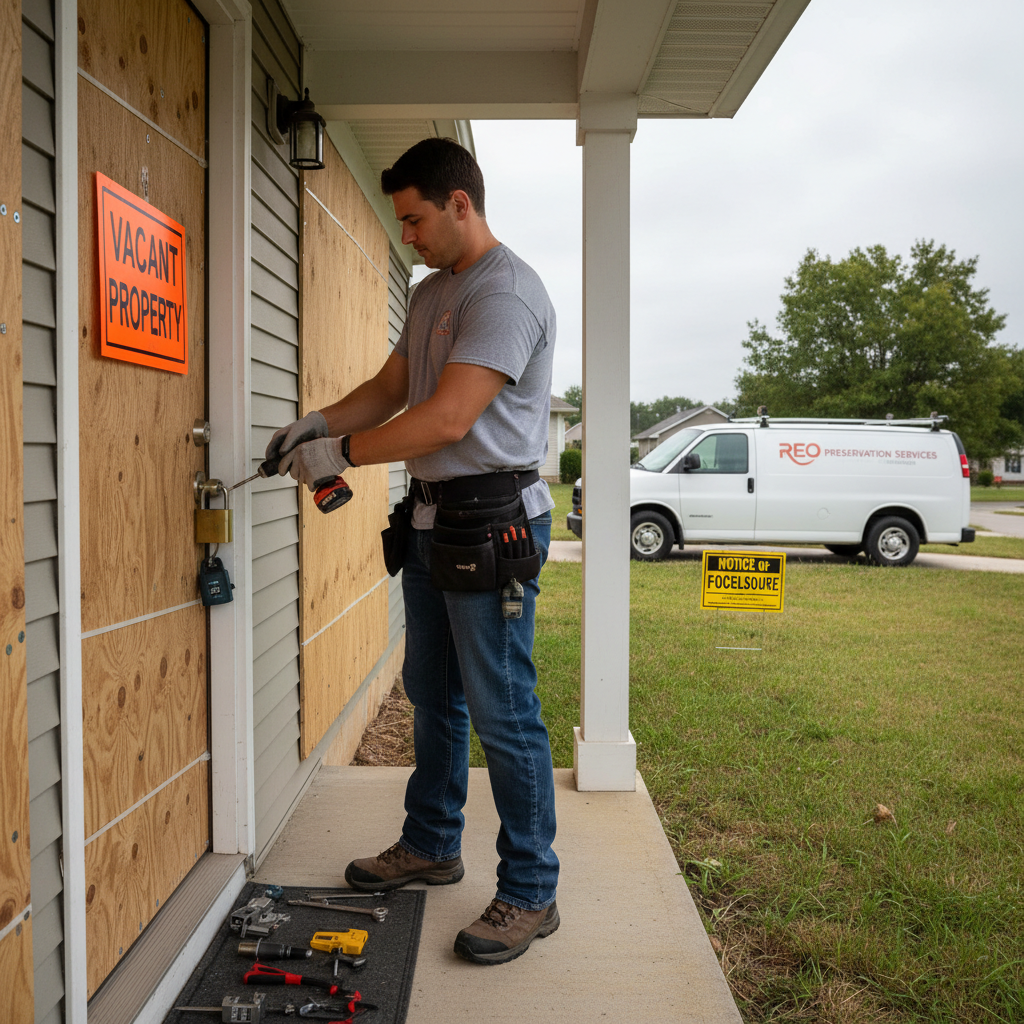
Vacant Property Securing: Protecting Your Real Estate Assets
When a property becomes vacant — whether through foreclosure, tenant departure, or transition between owners — it immediately becomes vulnerable. Vacant properties face increased risks of vandalism, squatting, weather damage, and code violations. Proper securing is the first and most critical step in protecting these assets.
The Risks of Unsecured Vacant Properties
Vandalism and Theft
Vacant properties are prime targets for vandalism and theft. Within days of vacancy, properties can experience:
- Stolen copper piping and wiring
- Broken windows and doors
- Graffiti and interior damage
- Stolen appliances and fixtures
- Stripped HVAC systems
The average cost to repair vandalism damage on an unsecured vacant property exceeds $5,000, with severe cases reaching $50,000 or more.
Squatter Occupation
Squatters can establish legal tenancy rights in some jurisdictions, making removal a lengthy and expensive legal process. Signs of squatter occupation include:
- Changed locks
- Personal belongings inside
- Utility usage
- Vehicles in driveway
- Forged lease documents
Weather Damage
An unsecured property is exposed to the elements. A single broken window or unsecured door can allow:
- Water intrusion causing mold and structural damage
- Animal infestation
- Frozen pipes in winter
- Wind damage to interior
Code Violations and Fines
Municipalities enforce strict codes for vacant properties. Common violations include:
- Overgrown lawns
- Accumulated debris
- Unsecured structures
- Peeling paint
- Non-functioning utilities
Fines for code violations can accumulate at $100-$1,000 per day, creating significant financial liability.
The Property Securing Process
Step 1: Initial Assessment
Before securing, conduct a thorough assessment:
- Document existing damage with photos
- Identify all entry points
- Assess window and door conditions
- Check for existing hazards (mold, structural, environmental)
- Verify utility status
Step 2: Securing Entry Points
Doors:
- Re-key all exterior locks with a standardized system
- Install a contractor lockbox for vendor access
- Reinforce weak doors if necessary
- Install deadbolt locks on all entry doors
Windows:
- Board up accessible ground-floor windows with plywood
- Consider clear boarding (polycarbonate panels) for aesthetic areas
- Secure basement and upper-floor accessible windows
- Check and repair window locks
Other Access Points:
- Secure garage doors
- Check basement entries and crawl space access
- Secure pet doors
- Block chimney access
Step 3: Hazard Mitigation
- Remove combustible materials
- Address standing water or moisture issues
- Secure loose or hanging fixtures
- Remove trip hazards and debris
- Identify and label environmental hazards
Step 4: Utility Management
- Shut off water at the main valve
- Drain plumbing system (if winterizing)
- Shut off gas at the meter
- Maintain electrical service for security lighting if needed
- Post utility shut-off documentation
Step 5: Documentation
- Photo document all entry points before and after securing
- Record lockbox codes and key assignments
- Document any pre-existing damage
- Create a property condition report
- Store documentation securely for future reference
Securing Options: Board-Up vs. Clear Boarding
Traditional Plywood Board-Up
Pros:
- Cost-effective
- Readily available materials
- Quick installation
Cons:
- Signals vacancy to potential trespassers
- Reduces curb appeal
- Can attract vandalism
- Blocks natural light completely
Clear Boarding (Polycarbonate Panels)
Pros:
- Appears as regular windows — doesn't signal vacancy
- Maintains curb appeal
- Allows natural light
- More secure than plywood
- Meets some HOA and municipal requirements
Cons:
- Higher material cost
- Requires specialized installation
Ongoing Monitoring After Securing
Securing is not a one-time event. Regular monitoring ensures the property remains secure:
- Weekly Drive-By: Visual inspection of exterior
- Monthly Interior Inspection: Verify securing measures are intact
- After Severe Weather: Check for damage or breaches
- After Reports of Activity: Investigate immediately
The Auxi Securing Solution
Auxi Services provides professional vacant property securing nationwide with:
- Rapid Response: Initial securing within 7 days of vacancy, emergency securing within 24 hours
- Professional Crews: Licensed, insured, and background-checked contractors
- Comprehensive Documentation: Before, during, and after photos with geo-tagging
- Standardized Lock Systems: Consistent key management across your portfolio
- Ongoing Monitoring: Scheduled inspections and immediate alerts
- Compliance Reporting: Investor and regulator-ready documentation
Conclusion
Vacant property securing is the foundation of asset protection. A properly secured property prevents the cascade of issues — vandalism, squatting, weather damage, and code violations — that can destroy property value and create liability.
Don't leave your vacant properties vulnerable. Contact Auxi Services to learn how our nationwide securing network can protect your real estate assets.