Summer HVAC Maintenance: Prevent Breakdowns
Summer is when HVAC systems work hardest and fail most often. The combination of high temperatures, humidity, and extended runtime pushes aging components to their limits. A few preventive maintenance steps can prevent the majority of mid-season breakdowns.
Why Summer Breakdowns Happen
HVAC failures spike during the first sustained heat wave of the season. Systems that sat idle for months suddenly run continuously, exposing worn components that seemed fine during mild weather. Capacitors fail, contactors stick, and refrigerant levels reveal leaks that went unnoticed during cooler months.
Essential Summer HVAC Maintenance
Replace Air Filters
Dirty filters are the number one cause of AC performance problems. A clogged filter restricts airflow, causing the system to work harder, freeze up, and eventually fail. Replace filters monthly during peak cooling season. For commercial properties with high traffic, consider bi-weekly replacement.
Clean Outdoor Condenser Units
The outdoor condenser needs unrestricted airflow. Dirt, grass clippings, and debris on the fins reduce heat transfer efficiency by up to 30 percent. Gently clean the fins with a garden hose (not a pressure washer) and trim vegetation at least 2 feet back from the unit.
Check Refrigerant Levels
Low refrigerant indicates a leak that needs professional repair. Signs of low refrigerant include reduced cooling capacity, longer run times, ice on refrigerant lines, and higher utility bills. Only a licensed technician can check and recharge refrigerant.
Inspect Electrical Components
- Capacitors: Test for proper microfarad rating
- Contactors: Check for pitting and burning
- Wiring: Inspect for heat damage or loose connections
- Circuit boards: Look for burn marks or bulging capacitors
Clean Evaporator Coil
The indoor evaporator coil collects dust and debris that reduces cooling efficiency. A dirty coil can increase energy consumption by 20 percent or more. Professional coil cleaning should be done annually.
Clear Condensate Drain Line
A clogged condensate drain causes water backup, which triggers safety switches that shut down the system. Pour a cup of bleach or vinegar down the drain line monthly to prevent algae buildup.
Calibrate Thermostat
An improperly calibrated thermostat causes short cycling, overcooling, and energy waste. Verify the thermostat reading against a separate thermometer. Replace batteries annually.
Commercial HVAC Considerations
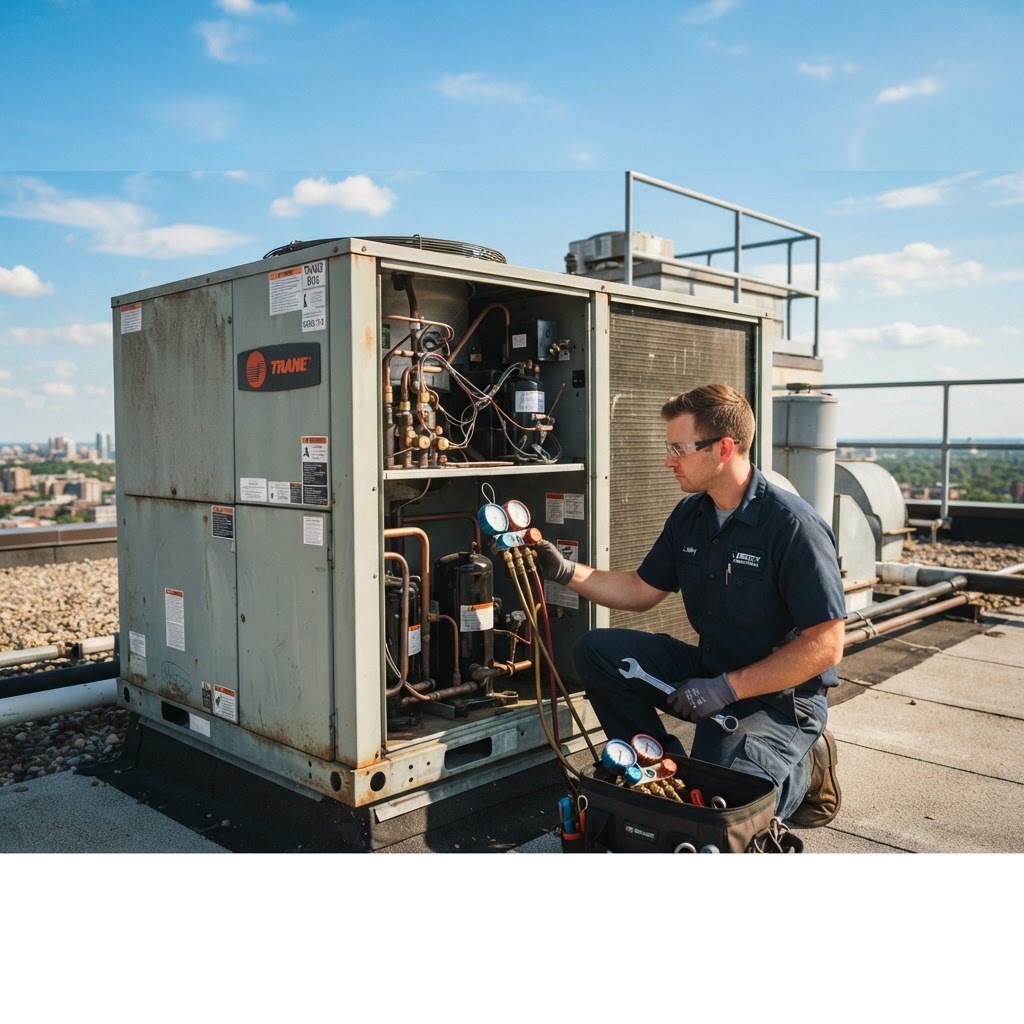
Commercial rooftop units (RTUs) require additional maintenance:
- Check economizer operation and settings
- Inspect belt tension and condition on belt-driven units
- Clean condenser coil with chemical degreaser (restaurant-adjacent units)
- Verify proper drainage from condensate pan
- Check for rust and corrosion on cabinet panels
Signs Your System Needs Professional Service
- Unusual noises (grinding, squealing, banging)
- Reduced airflow from supply registers
- Warm air instead of cold
- Frequent cycling on and off
- Higher than normal utility bills
- Ice on refrigerant lines or indoor coil
- Burning or musty odors
The Cost of Prevention vs Repair
Annual HVAC maintenance costs $150 to $300 per system for residential, and $500 to $1,500 per rooftop unit for commercial. Compare that to emergency repair costs: a compressor replacement can cost $1,500 to $2,800, and a full system replacement runs $5,000 to $12,000. Preventive maintenance pays for itself many times over.