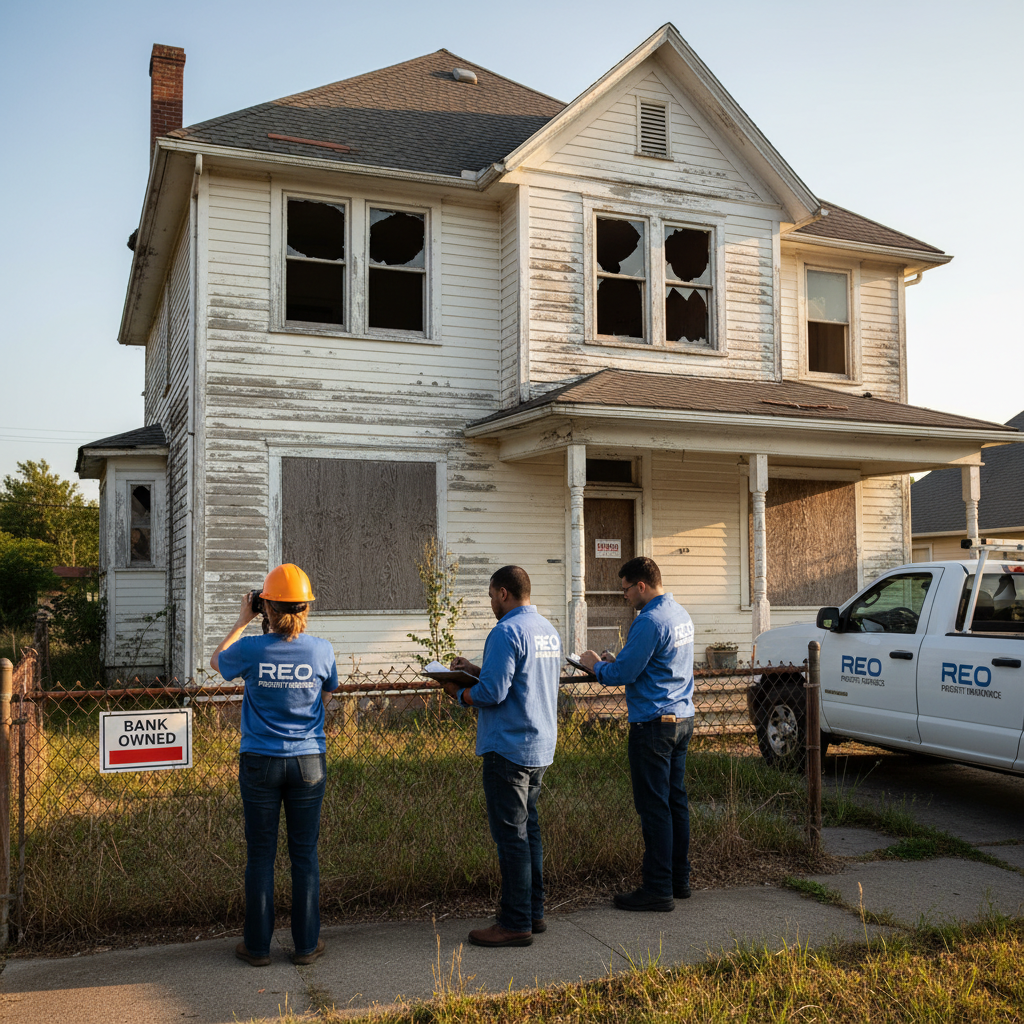
REO Property Maintenance: Best Practices for Asset Managers
Real Estate Owned (REO) properties represent a significant asset class for lenders, loan servicers, and institutional investors. Managing the maintenance of these bank-owned properties requires a systematic approach that balances cost control, regulatory compliance, and asset value protection. This guide outlines best practices for REO property maintenance that asset managers can implement immediately.
Understanding REO Maintenance
REO maintenance encompasses all activities required to keep bank-owned properties in marketable condition from acquisition through disposition. Unlike traditional property management, REO maintenance operates under strict timelines, documentation requirements, and budget constraints set by investors and regulators.
Key Differences from Standard Property Management
- Vacancy Duration: REO properties are typically vacant for 3-12 months, requiring preservation-grade maintenance rather than occupancy-focused services
- Documentation Requirements: Every task requires timestamped photo documentation for investor reporting
- Compliance Standards: HUD, Fannie Mae, and Freddie Mac impose specific maintenance timelines and standards
- Budget Controls: Maintenance spending is tightly controlled and requires approval workflows
- Disposition Focus: All maintenance decisions should optimize for eventual sale value
The REO Maintenance Lifecycle
Phase 1: Acquisition & Initial Securing
When a property becomes REO, the first 7 days are critical:
- Property Securing — Re-key, board-up (if needed), and install lockbox
- Initial Inspection — Comprehensive condition assessment with photos
- Trash-Out — Remove all abandoned personal property and debris
- Hazard Identification — Identify mold, water damage, structural issues, environmental hazards
- Utility Management — Transfer or shut off utilities as needed
Phase 2: Ongoing Preservation
During the holding period, recurring maintenance keeps the property marketable:
- Lawn Maintenance — Bi-weekly or monthly, depending on climate and HOA requirements
- Snow Removal — Seasonal, required for code compliance and liability prevention
- Inspections — Monthly or bi-monthly occupancy and condition checks
- Pest Control — Quarterly prevention and treatment
- Emergency Repairs — Rapid response for water intrusion, vandalism, or weather damage
Phase 3: Pre-Sale Preparation
As disposition approaches, focus shifts to maximizing sale value:
- Cost-Benefit Analysis — Determine which repairs yield positive ROI
- Cosmetic Improvements — Paint, flooring, lighting updates
- Major System Repairs — HVAC, roof, plumbing if needed for sale
- Final Clean-Out — Deep cleaning and final trash-out
- Staging Consultation — Optional staging for higher-value properties
Best Practices for Asset Managers
1. Implement a Centralized Management Platform
Managing REO maintenance across a portfolio requires a centralized system that tracks:
- Property-level maintenance history
- Work order status and completion
- Photo documentation and condition reports
- Budget tracking and approval workflows
- Vendor performance metrics
A platform like Auxi provides all of this in a single dashboard, eliminating the inefficiency of spreadsheets, email chains, and phone calls.
2. Establish Clear Maintenance Standards
Define standardized maintenance protocols for:
- Initial securing timelines (target: 7 days)
- Inspection frequency (monthly minimum)
- Lawn care schedule (bi-weekly in growing season)
- Emergency response times (24 hours maximum)
- Photo documentation requirements (before, during, after)
3. Vet and Manage Your Vendor Network
Your preservation vendors directly impact asset value and compliance. Ensure vendors:
- Are licensed and insured in their operating states
- Have passed background checks
- Understand investor documentation requirements
- Can respond within required timelines
- Have adequate crew capacity for your volume
4. Leverage Data for Decision-Making
Track key metrics across your portfolio:
- Days from acquisition to secured — Target: <7 days
- Average monthly maintenance cost per property — Benchmark against portfolio average
- Code violations per 100 properties — Target: zero
- Time from listing to sale — Identify properties with longer-than-average DOM
- Maintenance cost as % of sale price — Ensure maintenance spending is proportional
5. Plan for Seasonal Variations
REO maintenance is not static. Seasonal considerations include:
- Winter: Winterization, snow removal, frozen pipe prevention
- Spring: Lawn restart, gutter cleaning, exterior inspection
- Summer: HVAC maintenance, pest control, landscaping peak
- Fall: Leaf removal, gutter cleaning, winterization preparation
Common REO Maintenance Mistakes to Avoid
- Delayed Initial Securing — Every day a property sits unsecured increases risk and cost
- Inadequate Documentation — Missing or poor-quality photos create compliance and billing issues
- Over-Maintenance — Spending more on maintenance than the property will return at sale
- Under-Maintenance — Neglecting curb appeal reduces sale price and extends DOM
- Ignoring Code Violations — Municipal fines compound quickly and create legal exposure
- Poor Vendor Communication — Unclear scopes lead to incomplete work and re-do's
How Auxi Supports REO Asset Managers
Auxi Services provides REO asset managers with a comprehensive platform for managing preservation and maintenance across their portfolios:
- Nationwide Vendor Network — Vetted, licensed, and insured contractors in all 50 states
- Centralized Dashboard — Track every property, work order, and document in one place
- Automated Scheduling — Set recurring maintenance tasks that dispatch automatically
- Photo Documentation — Timestamped, geo-tagged photos for every task
- Compliance Reporting — Investor-ready reports generated automatically
- Budget Controls — Approval workflows prevent overspending
- Real-Time Alerts — Instant notification of code violations, damage, or emergencies
Conclusion
Effective REO property maintenance requires systematic processes, reliable vendors, and powerful technology. By implementing these best practices, asset managers can protect portfolio value, reduce carrying costs, and accelerate disposition timelines.
Auxi Services partners with lenders, servicers, and institutional investors to manage REO portfolios nationwide. Contact us to learn how our platform can streamline your REO maintenance operations.