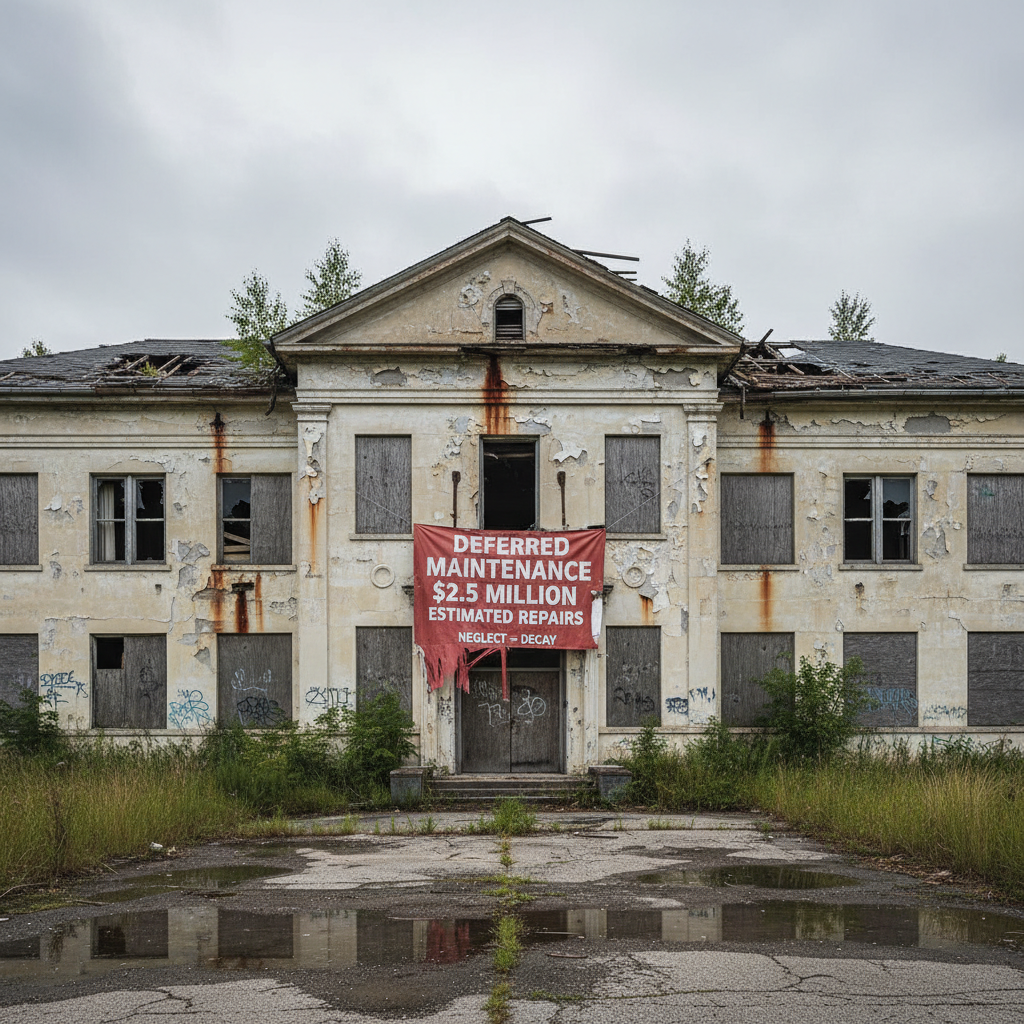
The Real Cost of Deferred Maintenance: Why Putting Off Repairs Costs More
Deferred maintenance is one of the most expensive decisions a property manager can make. What seems like a cost-saving measure—delaying repairs to save money today—actually multiplies costs over time, often by a factor of 4x to 10x.
This guide breaks down the real costs of deferred maintenance and shows why proactive maintenance is always the better financial decision.
What Is Deferred Maintenance?
Definition
Deferred maintenance is the practice of postponing maintenance, repairs, or replacement of building components and systems to a future date, typically to save costs in the current budget period.
Why It Happens
- Budget constraints: Not enough money in the current budget
- Competing priorities: Other projects seem more urgent
- "If it ain't broke" mentality: Waiting for failure before acting
- Short-term thinking: Focusing on current-year financials over long-term value
- Lack of reserve studies: Not knowing what needs to be done or when
- Ownership pressure: Investors wanting to maximize current returns
- Staffing shortages: Not enough maintenance staff to keep up
The True Cost Multiplier
How Deferred Maintenance Escalates Costs
Deferred maintenance doesn't just delay costs—it multiplies them through several mechanisms:
1. Cost Escalation Over Time
| Delay Period | Cost Increase | |---|---| | 1 year | +10-25% | | 2 years | +25-50% | | 3 years | +50-100% | | 5+ years | +100-300% |
Costs increase due to:
- Inflation of materials and labor
- Component degradation (problems worsen over time)
- Collateral damage to surrounding systems
- Emergency repair premiums (vs. scheduled maintenance)
- Reduced competitive bidding (emergencies limit options)
2. Collateral Damage
When one system fails, it often damages others:
Example: Delayed Roof Repair
- Small roof leak identified: $500 to fix
- Leak deferred 6 months: Water damages insulation ($1,500)
- Leak deferred 1 year: Water damages ceiling drywall ($3,500)
- Leak deferred 2 years: Mold remediation required ($8,000-$15,000)
- Leak deferred 3 years: Structural damage ($20,000-$50,000+)
What started as a $500 repair becomes a $50,000+ project.
3. Emergency vs. Planned Repair Costs
| Service | Planned Cost | Emergency Cost | Premium | |---|---|---|---| | HVAC repair | $400-$800 | $800-$2,000 | +100-150% | | Plumbing repair | $300-$600 | $600-$1,500 | +100-150% | | Roof repair | $500-$2,000 | $1,500-$5,000 | +150-200% | | Electrical repair | $300-$700 | $600-$1,800 | +100-150% |
4. Reduced Asset Lifespan
Deferred maintenance shortens the life of building systems:
| System | Normal Lifespan | With Deferred Maintenance | Loss | |---|---|---|---| | HVAC system | 15-20 years | 10-12 years | -30-40% | | Roof | 20-25 years | 12-15 years | -30-40% | | Water heater | 10-12 years | 6-8 years | -30-40% | | Parking lot | 20-30 years | 12-15 years | -40-50% | | Elevator | 25-30 years | 18-22 years | -25-30% |
Examples of Deferred Maintenance Costs
Example 1: HVAC System
Scenario: A commercial building's HVAC system is showing signs of reduced efficiency.
Proactive Maintenance:
- Quarterly maintenance visits: $400/quarter × 4 = $1,600/year
- Expected system life: 18 years
- Total maintenance cost over 18 years: $28,800
- System replacement at year 18: $45,000
- Total 18-year cost: $73,800
Deferred Maintenance:
- Skip quarterly maintenance
- System fails at year 12 (6 years early)
- Emergency replacements and interim repairs: $8,000
- System replacement at year 12: $45,000
- Higher energy costs (15% more): $2,400/year × 12 = $28,800
- Tenant complaints and potential loss: $5,000+
- Total 12-year cost: $86,800+
Cost of deferral: $13,000+ more over 6 fewer years
Example 2: Parking Lot
Proactive Maintenance (20-year cycle):
- Annual seal coating: $3,000/year × 7 (every 3 years) = $21,000
- Crack filling: $1,000/year × 20 = $20,000
- Line striping: $1,500 every 2 years × 10 = $15,000
- Resurfacing at year 15: $25,000
- Total 20-year cost: $81,000
Deferred Maintenance (12-year cycle):
- No maintenance performed
- Full replacement at year 12: $180,000
- Lost parking revenue during construction: $5,000
- Total 12-year cost: $185,000
Cost of deferral: $104,000 more over 8 fewer years
Example 3: Plumbing System
Proactive:
- Annual inspection: $500/year
- Small leak repaired immediately: $200-500 each
- Expected component life: 20+ years
- Total annual maintenance: ~$1,000
Deferred:
- No inspections
- Small leak becomes major leak
- Water damage: $5,000-$20,000
- Emergency plumbing repair: $1,500-$3,000
- Mold remediation if water sits: $3,000-$10,000
- Total cost of one deferred leak: $9,500-$33,000
Hidden Costs of Deferred Maintenance
1. Energy Inefficiency
Deferred maintenance on building systems increases energy consumption:
- Dirty HVAC coils: +10-15% energy cost
- Leaky ductwork: +20-30% energy cost
- Poor insulation (from deferred envelope repairs): +15-25% energy cost
- Inefficient water heaters: +15-30% energy cost
2. Tenant Satisfaction and Retention
Deferred maintenance directly impacts tenant satisfaction:
- Slow maintenance response is the #1 reason tenants move
- Visible deferred maintenance signals poor management
- Tenants who experience maintenance issues are 3x more likely to not renew
- Each turnover costs $1,500-$5,000+
3. Property Value
Deferred maintenance reduces property value:
- Buyers discount for known deferred maintenance
- Appraisals reflect condition
- Due diligence reveals deferred items
- Financing may be harder to secure
- Insurance premiums may increase
4. Liability Exposure
Deferred maintenance creates liability:
- Slip and fall from deferred parking lot repairs
- Injuries from deferred structural repairs
- Water damage to tenant property from deferred plumbing repairs
- Mold claims from deferred moisture management
- Code violations from deferred compliance
5. Staff Productivity
When maintenance is deferred:
- Staff spend more time on emergency response
- Less time for preventive maintenance (creating a downward spiral)
- Increased stress and burnout
- Higher staff turnover
The Financial Case for Proactive Maintenance
ROI of Preventive Maintenance
Industry studies consistently show:
- $1 spent on preventive maintenance saves $5-$10 in future repair costs
- Preventive maintenance reduces emergency repairs by 50-70%
- Proactive maintenance extends asset life by 25-50%
- Energy savings of 10-20% from well-maintained systems
- Tenant retention improvement of 15-25%
Reserve Studies and Capital Planning
A reserve study identifies all major building components, their remaining lifespan, and the funding needed to replace them. This allows you to:
- Plan for future replacements
- Budget appropriately
- Avoid surprise failures
- Prioritize maintenance investments
- Demonstrate financial responsibility to ownership
The 1-2-3 Rule
A simple framework for maintenance budgeting:
- 1% of property value annually for routine maintenance
- 2% of property value annually for preventive maintenance and minor repairs
- 3% of property value annually for older properties or those with significant deferred maintenance
Building a Proactive Maintenance Program
Step 1: Conduct a Property Assessment
- Inventory all building systems and components
- Assess condition of each
- Identify deferred maintenance items
- Estimate remaining useful life
- Prioritize by criticality and cost
Step 2: Develop a Maintenance Schedule
Create a calendar of maintenance activities:
- Daily/weekly tasks (inspections, cleaning)
- Monthly tasks (filter changes, visual inspections)
- Quarterly tasks (HVAC service, roof inspection)
- Annual tasks (comprehensive inspections, major maintenance)
- Multi-year plans (component replacement schedule)
Step 3: Budget Appropriately
- Allocate funds for routine maintenance
- Create a reserve fund for major replacements
- Include contingency for unexpected issues
- Review and adjust annually based on actual performance
Step 4: Track and Report
- Track all maintenance activities
- Monitor costs vs. budget
- Report on maintenance metrics
- Use data to justify future budgets
- Demonstrate the ROI of maintenance spending
Conclusion
Deferred maintenance is not a cost-saving measure—it's cost deferral with interest. Every dollar saved by delaying maintenance costs $5-$10 in the future, plus collateral damage, reduced asset life, increased energy costs, tenant dissatisfaction, and liability exposure. The most financially responsible approach is proactive, preventive maintenance that protects your property investment and maximizes long-term value.
Auxi Services helps property managers build proactive maintenance programs that save money and extend asset life. Contact us to schedule a property assessment.