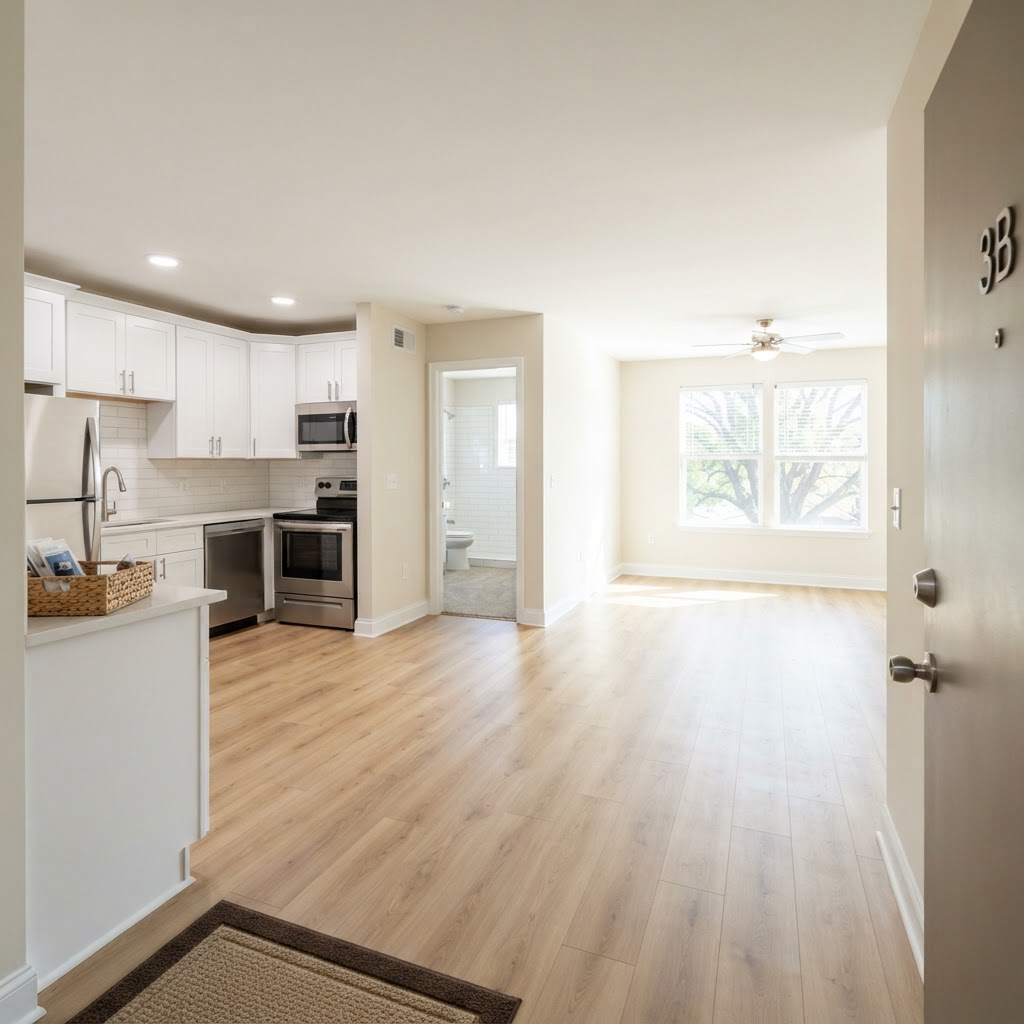
The Complete Guide to Multifamily Turnover Services
Multifamily property turnover is one of the most critical—and expensive—operational cycles in property management. Every time a resident moves out, a clock starts ticking. Every day the unit sits vacant, revenue is lost. Every day the turnover drags on, the next resident's move-in is delayed.
This guide breaks down everything property managers and owners need to know about multifamily turnover services: what they include, how much they cost, how long they take, and how to optimize the process to minimize vacancy loss.
What Are Multifamily Turnover Services?
Multifamily turnover services encompass all the tasks required to prepare a vacated apartment unit for the next resident. A turnover transforms a lived-in unit back into a move-in-ready home.
A professional turnover typically includes:
- Full unit inspection and damage assessment
- Trash-out and haul-away of all debris and abandoned items
- Deep cleaning of every surface, appliance, and fixture
- Wall repair and painting (patch, prime, paint)
- Flooring repair or replacement (carpet, LVP, tile)
- Appliance inspection and replacement if needed
- Plumbing and electrical checks and minor repairs
- HVAC filter replacement and vent cleaning
- Blind and window treatment replacement or repair
- Final quality inspection and move-in checklist
The True Cost of a Slow Turnover
Vacancy Loss
The biggest cost in a turnover isn't the paint or the cleaning—it's the lost rent. Consider a unit that rents for $1,400/month:
| Turnover Duration | Vacancy Loss | |---|---| | 7 days | $326 | | 14 days | $653 | | 21 days | $980 | | 30 days | $1,400 | | 45 days | $2,100 |
A turnover that stretches from 7 days to 21 days triples your vacancy loss—before any repair costs are added.
Hidden Costs of Poor Turnovers
Beyond direct vacancy loss, poorly executed turnovers create cascading problems:
- Resident dissatisfaction: New residents who move into a unit with lingering issues are immediately dissatisfied, leading to early move-outs and negative reviews.
- Re-do costs: If the cleaning or paint is subpar, you pay to fix it again—often at emergency rates to avoid delaying move-in.
- Reputation damage: Online reviews mentioning 'unit wasn't clean' or 'repairs weren't done' deter prospective residents.
- Staff burnout: Property managers who spend their days chasing turnover vendors can't focus on leasing, retention, and revenue growth.
How Long Should a Turnover Take?
Standard Turnover Timeline
A well-managed turnover for a standard 1-bedroom unit should take 5-7 business days:
- Day 1: Resident moves out, final inspection completed, scope of work defined
- Day 2: Trash-out, haul-away, and initial cleaning
- Day 3: Wall repair and paint prep
- Day 4: Painting completed
- Day 5: Flooring repair/replacement, appliance check
- Day 6: Deep cleaning, HVAC service, final punch list
- Day 7: Quality inspection and move-in ready
Factors That Extend Turnover
- Extensive damage: Holes in walls, damaged flooring, broken fixtures
- Pet damage: Odors, scratched doors, stained carpet (often requires replacement)
- Hoarding situations: Excessive debris requiring specialized cleanup
- Water or fire damage: Requires remediation before standard turnover
- Custom requests: Upgrades requested by ownership (new fixtures, accent walls)
- Vendor availability: Waiting for a specific vendor to be available
Turnover Cost Breakdown
Average Turnover Costs by Unit Size
| Unit Type | Standard Turnover | Full Turnover (with paint + flooring) | |---|---|---| | Studio | $800 - $1,200 | $1,500 - $2,500 | | 1 Bedroom | $1,000 - $1,500 | $2,000 - $3,500 | | 2 Bedroom | $1,300 - $1,800 | $2,500 - $4,500 | | 3 Bedroom | $1,600 - $2,200 | $3,000 - $5,500 |
What's Included in Standard vs. Full Turnover
Standard Turnover (light refresh):
- Trash-out and haul-away
- Surface cleaning
- Touch-up paint
- Carpet cleaning (not replacement)
- Appliance testing
- Filter replacement
- Minor repairs
Full Turnover (make-ready):
- Everything in standard, plus:
- Full repaint (walls, ceilings, trim)
- Flooring replacement (carpet or LVP)
- Appliance replacement (if aging or damaged)
- Cabinet refacing or replacement
- Fixture upgrades
- Blind replacement
The Turnover Process Step by Step
Step 1: Move-Out Inspection (Day 1)
Conducted within 24 hours of resident move-out:
- Document unit condition with photos
- Compare against move-in inspection
- Identify resident-caused damage vs. normal wear
- Define scope of work for turnover
- Estimate cost and timeline
Step 2: Trash-Out and Haul-Away (Day 1-2)
- Remove all abandoned items and debris
- Haul away large items (furniture, appliances)
- Dispose of hazardous materials properly
- Remove old blinds, fixtures, or damaged materials
- Clear the unit completely for cleaning and repair
Step 3: Wall Repair and Painting (Day 2-4)
- Patch holes, cracks, and dents
- Sand and prime repaired areas
- Caulk gaps around trim and baseboards
- Paint ceilings (if needed)
- Paint walls (full repaint or touch-up)
- Paint trim, doors, and baseboards
- Allow proper dry time between coats
Step 4: Flooring (Day 4-5)
- Inspect existing flooring
- Carpet: deep clean or replace
- LVP/Laminate: repair damaged planks or replace
- Tile: clean grout, re-seal, or replace damaged tiles
- Stretch loose carpet
- Replace damaged underlayment if needed
Step 5: Kitchen and Bathroom (Day 5-6)
- Deep clean cabinets inside and out
- Replace cabinet hardware if dated
- Re-caulk sinks, tubs, and showers
- Clean and seal grout
- Replace showerheads and aerators
- Test and clean all appliances
- Replace broken or aging appliances
Step 6: Mechanical Systems (Day 5-6)
- Replace HVAC filters
- Clean supply and return vents
- Test heating and cooling
- Check water heater for leaks and proper temperature
- Test smoke and carbon monoxide detectors
- Replace batteries in detectors
- Test all electrical outlets and GFCIs
Step 7: Deep Cleaning (Day 6)
- Clean all surfaces, fixtures, and hardware
- Clean inside all appliances (refrigerator, oven, dishwasher)
- Clean windows, blinds, and sills
- Clean baseboards and door frames
- Sanitize bathroom (toilet, tub, shower, sink)
- Sweep, mop, and vacuum all floors
- Remove any paint splatter or construction dust
Step 8: Final Inspection and Punch List (Day 7)
- Complete move-in ready checklist
- Verify all scope items completed
- Take move-in photos for file
- Confirm unit is clean and odor-free
- Verify all keys and remotes accounted for
- Release unit for leasing
Common Turnover Challenges (and Solutions)
Challenge: Coordinating Multiple Vendors
Problem: Painters, cleaners, flooring installers, and handymen all need access—often resulting in scheduling conflicts and idle time.
Solution: Use a single turnover service provider or a platform that coordinates all vendors under one schedule. Auxi Services handles the full scope with a coordinated crew, eliminating the back-and-forth.
Challenge: Inconsistent Quality
Problem: Different vendors each time means inconsistent results. One turnover looks great, the next has issues.
Solution: Standardize your turnover scope of work with a detailed checklist. Require photo verification of completion. Use the same vendor network consistently.
Challenge: Cost Overruns
Problem: Turnovers start with a budget but end up costing 30-50% more due to 'discovered' issues.
Solution: Require a thorough move-out inspection before quoting. Build contingency into the budget. Use fixed-bid pricing for standard scopes and time-and-materials only for unexpected issues.
Challenge: Delays
Problem: 'It'll be ready Friday' turns into 'next Wednesday'—and you lose a week of rent.
Solution: Set clear deadlines in the work order. Require daily progress updates. Use a platform that tracks completion in real-time and flags delays immediately.
Turnover Best Practices
1. Start Before Move-Out
Schedule the turnover vendor the moment you receive a notice to vacate. Don't wait until the resident moves out to start planning—the clock is already ticking.
2. Standardize Your Scope
Create a turnover scope of work template for each unit type. Every turnover should follow the same steps, with the same quality standards, regardless of who does the work.
3. Use Photo Documentation
Require before and after photos for every turnover. This protects you in resident disputes, provides documentation for ownership, and creates a visual record of unit condition over time.
4. Inspect Every Turnover
Never release a unit for leasing without a final inspection. A 15-minute walk-through catches issues before the new resident moves in, when they're easy and cheap to fix.
5. Track Turnover Metrics
Measure:
- Average turnover duration
- Average turnover cost by unit type
- Vacancy days per turnover
- Percentage of turnovers completed on schedule
- Resident satisfaction with unit condition at move-in
Turnover Season: Preparing for Peak
For most markets, turnover season runs from May through September, when 50-70% of annual lease expirations occur.
Pre-Season Preparation (March-April)
- Forecast turnover volume by month
- Pre-qualify additional vendors
- Stock turnover supplies (paint, filters, hardware)
- Review and update turnover scope and pricing
- Schedule preventive maintenance that can be batched with turnovers
Peak Season Management (May-September)
- Hold daily turnover stand-up meetings
- Track every turnover on a shared dashboard
- Prioritize high-rent units to minimize vacancy loss
- Consider temporary staff for inspections
- Maintain a backup vendor list for overflow
Post-Season Review (October-November)
- Analyze turnover metrics for the season
- Identify vendors for retention or removal
- Update scope of work based on lessons learned
- Plan capital improvements for off-season
- Refine budget for next year
Turnover vs. Make-Ready: What's the Difference?
These terms are often used interchangeably, but they represent different scopes:
Turnover: The standard process of preparing a unit for a new resident. Typically includes cleaning, touch-up paint, carpet cleaning, and minor repairs. 5-7 day timeline.
Make-Ready: A more comprehensive refresh that may include full repaint, flooring replacement, appliance upgrades, and fixture updates. 7-14 day timeline. Often done when a unit has been through several standard turnovers or is being repositioned for a higher rent.
Understanding which you need for each unit prevents over-spending on units that just need a quick refresh, or under-investing in units that need a full update.
How Auxi Services Transforms Multifamily Turnovers
One Platform, Full Scope
Auxi Services handles every step of the turnover under one work order—from trash-out to final inspection. No more coordinating 4 different vendors for one unit.
Pre-Vetted, Performance-Rated Vendors
Every vendor in our network is licensed, insured, and performance-rated. You see real completion photos and reviews before paying.
Competitive, Transparent Pricing
Vendors bid on your turnover work orders, so you get fair market pricing every time. No inflated rates during peak season.
Real-Time Tracking
Track every turnover from your dashboard. See status updates, completion photos, and final costs in real-time—no more chasing vendors for updates.
Fast Turnaround
Our vendor network specializes in multifamily turnovers. Standard units are move-in ready in 5-7 days, with priority scheduling available for urgent situations.
Nationwide Coverage
Whether you manage one property or 500 across multiple states, you get consistent service quality, centralized billing, and unified reporting.
Quality Guarantee
Every turnover includes before and after photos, a completed punch list, and a quality inspection before the unit is released for leasing.
Conclusion
Multifamily turnover is where property management either creates or destroys value. A fast, consistent, high-quality turnover process minimizes vacancy loss, maximizes resident satisfaction, and protects your asset for the long term.
The key is standardization: a clear scope of work, reliable vendors, photo verification, and real-time tracking. With a platform like Auxi Services, you get all of that—plus competitive pricing and nationwide coverage—so every turnover is on time, on budget, and move-in ready.
Ready to streamline your multifamily turnovers? Contact Auxi Services for a free consultation.