Mold Remediation in Commercial Buildings: Prevention and Response
Mold is more than a nuisance—it's a health hazard, a liability risk, and a sign of underlying moisture problems. In commercial buildings, mold can force closures, trigger lawsuits, and cause tens of thousands of dollars in remediation costs.
This guide covers how to prevent mold, identify it early, and respond effectively when it appears.
Understanding Mold
What Is Mold?
Mold is a type of fungus that grows in damp, humid environments. It reproduces through spores that travel through the air and settle on surfaces. When conditions are right—moisture, food source, and temperature—mold grows rapidly.
Common Types in Commercial Buildings
- Aspergillus: Common indoor mold; can cause allergic reactions
- Cladosporium: Grows on wood, textiles, and other porous materials
- Stachybotrys (Black Mold): Infamous toxic mold; requires significant moisture
- Penicillium: Grows on water-damaged materials; spreads quickly
- Alternaria: Often found near water leaks or in damp areas
Health Effects
- Allergic reactions: Sneezing, runny nose, skin rash, eye irritation
- Asthma attacks: Mold is a common asthma trigger
- Respiratory issues: Coughing, wheezing, difficulty breathing
- Headaches: Prolonged exposure can cause chronic headaches
- Fatigue: Some individuals experience fatigue from mold exposure
- Serious conditions: Immunocompromised individuals are at higher risk for infections
Where Mold Grows in Commercial Buildings
High-Risk Areas
- Bathrooms and restrooms: High humidity and frequent water use
- HVAC systems: Condensation and moisture in ducts and drip pans
- Kitchens and break rooms: Plumbing leaks, appliance leaks
- Around windows: Condensation on cold surfaces
- Basements and lower levels: Ground moisture, poor ventilation
- Roof leak areas: Water intrusion from roof failures
- Plumbing chase areas: Hidden leaks behind walls
- Carpeted areas: Moisture trapped in carpet and padding
- Ceiling tiles: Above roof leaks or plumbing leaks
- Exterior walls: Condensation in wall cavities
Mold Prevention
1. Moisture Control
The key to mold prevention is moisture control. Mold cannot grow without moisture.
Strategies:
- Fix all plumbing leaks immediately
- Maintain indoor humidity below 60% (ideally 30-50%)
- Use dehumidifiers in damp areas
- Ensure proper ventilation in bathrooms, kitchens, and laundry areas
- Direct water away from building foundation
- Maintain gutters and downspouts
- Insulate cold surfaces to prevent condensation
- Monitor water bills for unusual increases (hidden leak indicator)
2. HVAC Maintenance
- Change filters regularly (monthly in high-traffic buildings)
- Clean drip pans and drain lines
- Inspect ductwork for condensation
- Maintain proper airflow throughout the building
- Clean and disinfect air handling units
- Schedule professional HVAC inspection quarterly
3. Building Envelope Maintenance
- Inspect roof for leaks quarterly
- Check window seals and caulking annually
- Inspect exterior walls for cracks and water intrusion
- Maintain proper grading around the building
- Clean and maintain gutters and downspouts
- Check for plumbing leaks behind walls
4. Regular Inspections
- Conduct monthly visual inspections of high-risk areas
- Use moisture meters to check suspicious areas
- Inspect ceiling tiles for water stains
- Check behind and under appliances regularly
- Monitor for musty odors (early mold indicator)
- Document inspection findings for trend analysis
5. Quick Response to Water Events
- Address water leaks within 24 hours
- Dry wet areas completely within 48 hours (mold can grow in 24-48 hours)
- Use fans and dehumidifiers to speed drying
- Remove standing water immediately
- Discard water-damaged porous materials that can't be dried
- Document water events and response actions
Identifying Mold Problems
Visual Signs
- Visible mold growth (fuzzy, slimy, or powdery patches)
- Water stains or discoloration on walls, ceilings, or floors
- Warped or bulging walls or ceilings
- Peeling or bubbling paint
- Discolored or stained grout and caulk
- Visible moisture or condensation
Odor Signs
- Musty or earthy smell (strongest indicator)
- Persistent odors that don't go away with cleaning
- Odors that intensify after rain or during humid weather
Health Signs
- Building occupants reporting allergy-like symptoms
- Increased asthma complaints
- Unexplained headaches or fatigue among occupants
- Symptoms that improve when leaving the building
Professional Assessment
If you suspect mold but can't see it:
- Air sampling: Collects and analyzes airborne mold spores
- Surface sampling: Swabs or tape samples of suspicious areas
- Moisture mapping: Identifies hidden moisture behind walls
- Infrared thermography: Detects temperature differences that indicate moisture
- Wall cavity inspection: Boroscope inspection behind walls
Mold Remediation Process
Step 1: Assessment and Containment
- Determine extent of contamination
- Identify moisture source and stop it
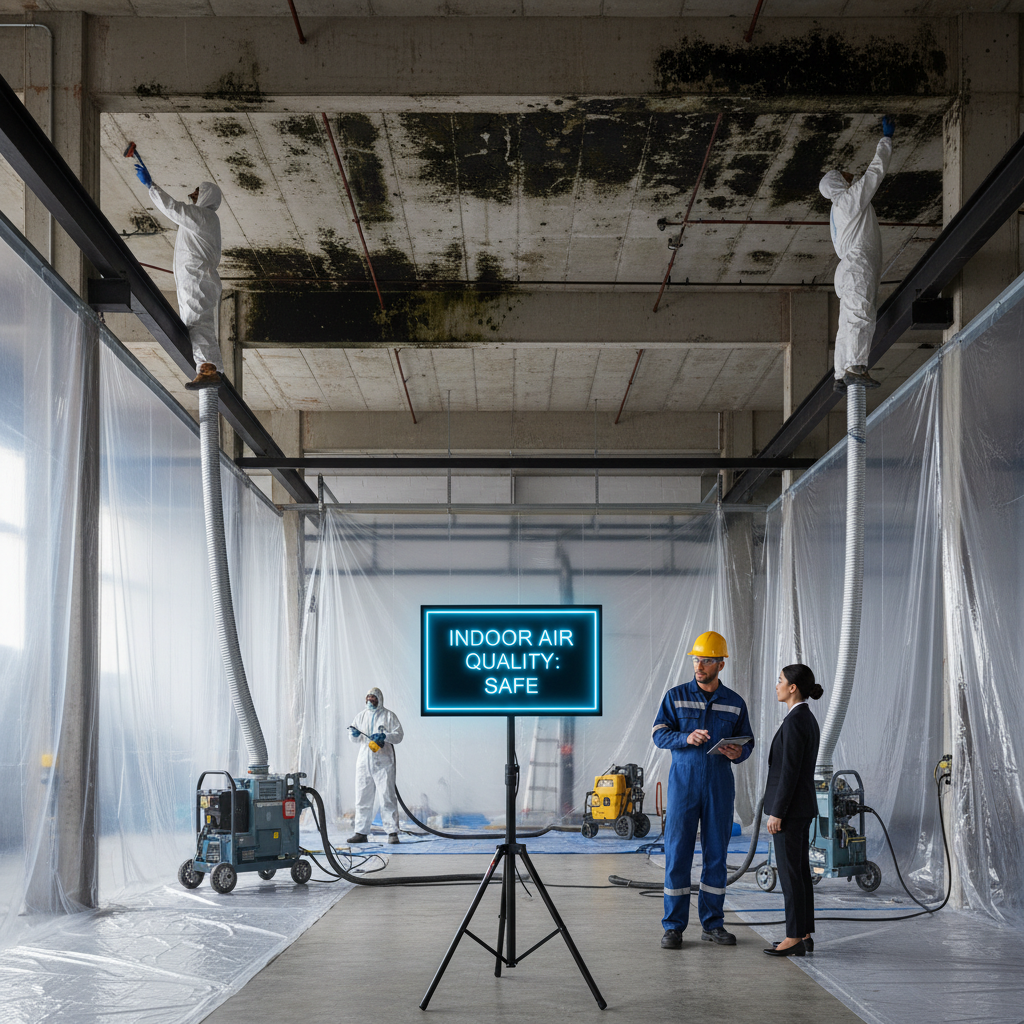
- Establish containment barriers (polyethylene sheeting)
- Create negative air pressure to prevent spore spread
- Seal HVAC vents in affected area
Step 2: Personal Protection
Remediation workers must use:
- N95 or P100 respirator masks
- Disposable protective suits
- Gloves (nitrile)
- Eye protection
- Foot covers
Step 3: Removal and Cleaning
Non-Porous Surfaces (metal, glass, hard plastic):
- Clean with EPA-registered fungicide
- Scrub to remove all visible mold
- Rinse and dry completely
Semi-Porous Surfaces (wood, concrete):
- Clean with fungicide
- Sand or wire brush if needed
- May require sealing with encapsulant
Porous Materials (drywall, carpet, insulation, ceiling tiles):
- Remove and dispose of heavily contaminated materials
- Bag and seal before transport
- Replace with new materials after area is dry and clean
Step 4: Drying
- Remove all moisture from affected area
- Use dehumidifiers and air movers
- Monitor moisture levels until normal
- Verify area is completely dry before reconstruction
Step 5: Reconstruction
- Replace removed materials
- Repair underlying moisture issue
- Paint with mold-resistant paint
- Install new drywall, insulation, or flooring as needed
- Conduct final air quality testing
Step 6: Prevention
- Address root cause of moisture
- Improve ventilation if needed
- Install moisture monitoring systems
- Schedule regular inspections
- Educate building occupants on reporting
Remediation Cost Guide
| Affected Area | Typical Cost | |---|---| | Small area (<10 sq ft) | $500-$1,500 | | Medium area (10-100 sq ft) | $1,500-$5,000 | | Large area (100-500 sq ft) | $5,000-$15,000 | | Extensive contamination (500+ sq ft) | $15,000-$50,000+ | | HVAC contamination | $3,000-$10,000+ | | Full building remediation | $50,000-$200,000+ |
Cost Factors
- Size of contaminated area
- Accessibility of affected area
- Type of materials affected (porous vs. non-porous)
- Extent of moisture damage
- Need for demolition and reconstruction
- Air quality testing requirements
- Professional vs. DIY (professional recommended for >10 sq ft)
Legal and Liability Considerations
Duty of Care
Property owners and managers have a legal duty to:
- Maintain safe, habitable conditions
- Address known mold problems promptly
- Disclose known mold issues to tenants/buyers
- Follow proper remediation protocols
- Document all mold-related activities
Documentation
Maintain records of:
- All mold inspections and findings
- Moisture intrusion events and response
- Remediation work performed
- Air quality testing results
- Communications with tenants/occupants
- Contractor invoices and certifications
Insurance
- Review property insurance for mold coverage
- Many policies exclude or limit mold damage
- Some policies cover mold if caused by a covered water damage event
- Consider mold insurance endorsements for high-risk properties
Conclusion
Mold is a serious concern in commercial buildings, but it's preventable and treatable with proper protocols. The key is moisture control—stop the moisture, and you stop the mold. Regular inspections, prompt response to water events, and professional remediation when needed will protect your building, your occupants, and your liability.
Auxi Services provides mold remediation, water damage restoration, and moisture prevention services. Contact us for assessment.