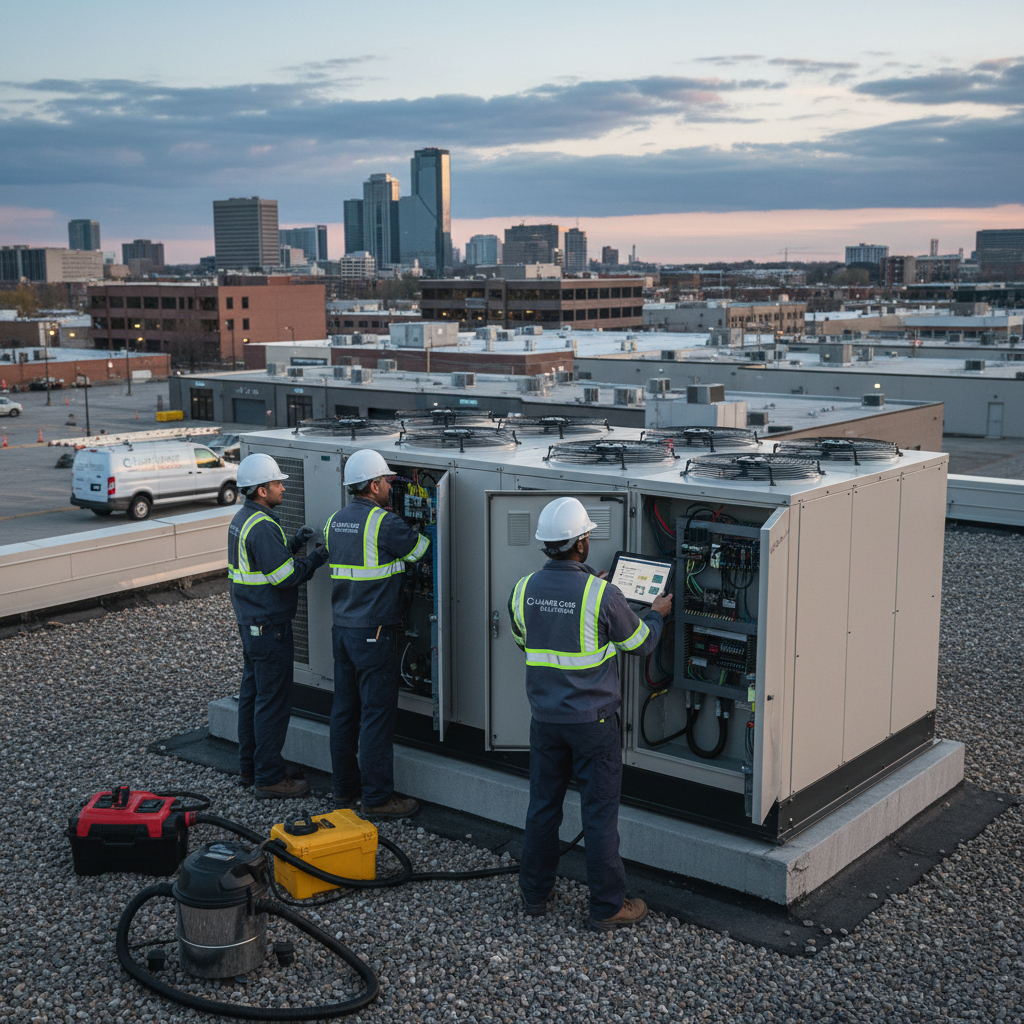
HVAC Preventive Maintenance for Commercial Buildings: Maximizing Efficiency and Reducing Costs
HVAC systems account for up to 40% of a commercial building's energy consumption. A well-executed preventive maintenance program can reduce energy costs by 15-20%, extend equipment lifespan by 5-10 years, and prevent costly emergency breakdowns.
Why HVAC Preventive Maintenance Matters
Commercial HVAC systems operate under heavy loads year-round. Without regular maintenance, efficiency degrades, energy bills climb, and catastrophic failures occur at the worst possible times — peak summer heat or winter freezes.
Key benefits of preventive maintenance:
- 15-20% reduction in energy consumption
- 25-40% fewer emergency repairs
- 5-10 year extension on equipment lifespan
- Improved indoor air quality for occupants
- Compliance with warranty requirements
- Reduced tenant complaints and turnover
Commercial HVAC Maintenance Schedule
Monthly Tasks
- Replace or clean air filters (every 1-3 months depending on usage)
- Inspect and clean condensate drain lines
- Check thermostat calibration and programming
- Inspect electrical connections and controls
- Monitor refrigerant pressure readings
- Clean outdoor condenser coils of debris
Quarterly Tasks
- Inspect and lubricate motors and bearings
- Check belt tension and alignment on belt-driven units
- Test safety controls and limit switches
- Inspect ductwork for leaks and damage
- Clean evaporator and condenser coils professionally
- Verify proper airflow at all registers and returns
Semi-Annual Tasks (Spring & Fall)
- Complete system changeover preparations
- Inspect heat exchanger for cracks or corrosion
- Test refrigerant charge and superheat/subcooling
- Calibrate sensors and economizer controls
- Inspect and clean burners and combustion components
- Verify proper ventilation and exhaust systems
Annual Tasks
- Comprehensive system performance audit
- Combustion analysis and efficiency testing
- Ductwork pressure testing and sealing
- Cooling tower cleaning and treatment (if applicable)
- Full electrical system inspection
- Water treatment system service for chilled water systems
Common Commercial HVAC Issues
1. Dirty Coils and Filters
Dirty evaporator and condenser coils reduce heat transfer efficiency by up to 30%. Clogged filters force systems to work harder, increasing energy consumption and accelerating wear.
2. Refrigerant Leaks
Low refrigerant charge reduces cooling capacity, increases energy consumption, and can damage compressors. Regular pressure monitoring catches leaks early.
3. Sensor Drift
Temperature and humidity sensors drift over time, causing systems to operate at wrong setpoints. This leads to comfort complaints and wasted energy.
4. Duct Leakage
Leaky ductwork can waste 20-30% of conditioned air. Professional duct testing and sealing pays for itself within 1-2 years.
5. Economizer Failure
Faulty economizers miss free cooling opportunities, running compressors when outdoor air could provide cooling at no cost.
Cost Analysis: Preventive vs. Reactive
Preventive Maintenance:
- Annual contract: $2,000-$8,000 per building
- Filter replacements: $200-$600 quarterly
- Coil cleaning: $400-$1,200 annually
- System inspection: $300-$800 quarterly
Reactive/Emergency Repairs:
- Emergency service call: $500-$1,500
- Compressor replacement: $4,000-$12,000
- Full system replacement: $25,000-$150,000
- Business interruption: $5,000-$50,000+ per day
Preventive maintenance costs 60-80% less than reactive repairs over a system's lifecycle.
Energy Efficiency Upgrades
Beyond maintenance, consider these upgrades:
- Smart thermostats and Building Management Systems (BMS) — 10-15% energy savings
- Variable Frequency Drives (VFDs) — 20-35% energy savings on fan and pump motors
- LED lighting integration — Reduces heat load, easing HVAC burden
- High-efficiency filters (MERV 13+) — Better air quality with acceptable pressure drop
- Demand-controlled ventilation — Adjusts fresh air based on occupancy
Vendor Selection for HVAC Maintenance
Choose HVAC vendors with:
- Commercial property experience (not just residential)
- EPA 608 certification for refrigerant handling
- Manufacturer certifications (Carrier, Trane, Daikin, etc.)
- 24/7 emergency response capability
- Documented preventive maintenance programs
- Energy auditing and optimization services
- Detailed service reporting and recommendations
Documentation and Compliance
Maintain comprehensive records:
- Service reports with photos and readings
- Filter and parts replacement logs
- Refrigerant usage tracking (EPA compliance)
- Energy consumption tracking and benchmarking
- Warranty documentation and registration
- Air quality test results
These records support warranty claims, energy benchmarking, and regulatory compliance.
Conclusion
HVAC preventive maintenance is one of the highest-ROI investments for commercial property owners. A structured maintenance program reduces energy costs by 15-20%, prevents costly emergency repairs, and extends equipment lifespan by 5-10 years. Partner with qualified commercial HVAC professionals, follow a seasonal maintenance schedule, and leverage smart building technology to maximize efficiency and comfort.