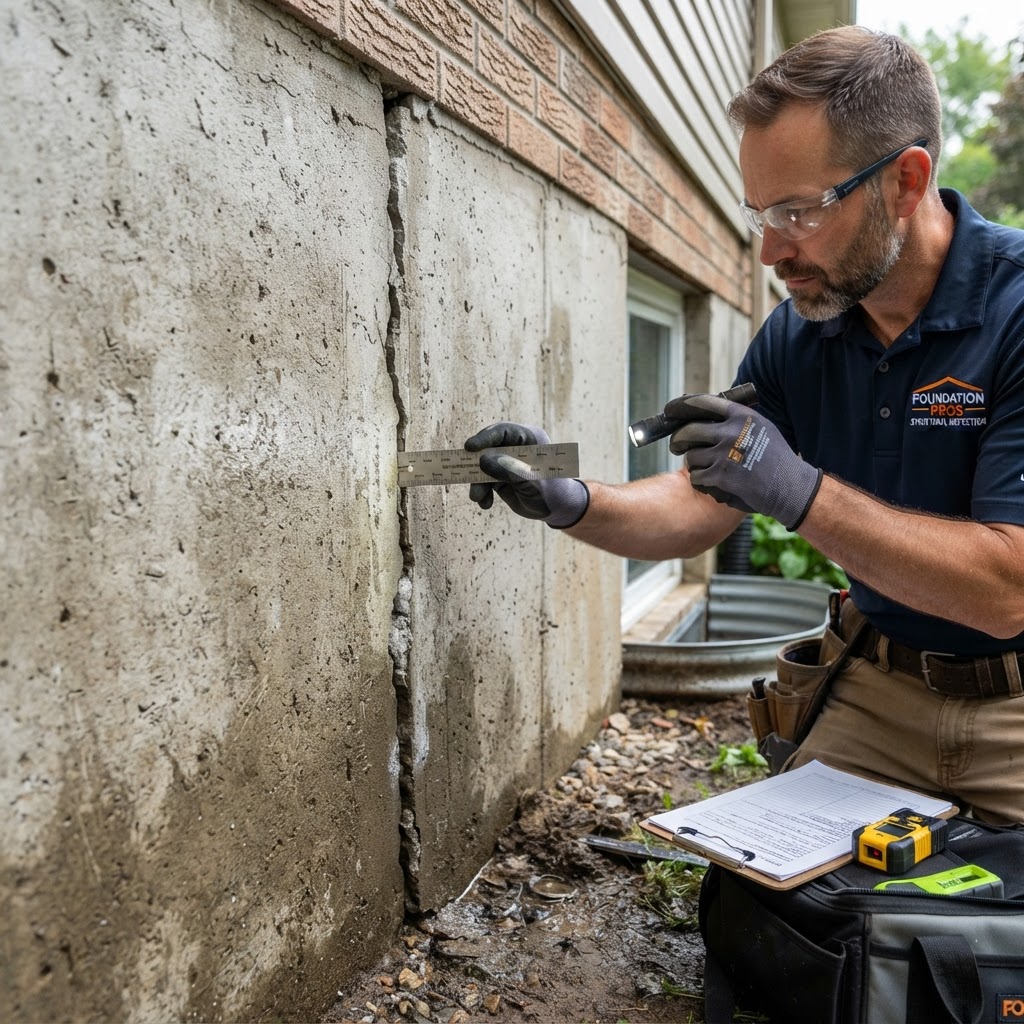
How to Spot Foundation Problems Before They Get Worse
Foundation problems are progressive — they only get worse over time, and the cost of repair increases exponentially as damage spreads. Catching foundation issues early can save tens of thousands of dollars and prevent structural damage that makes a property uninhabitable.
Warning Signs Inside the Property
Wall Cracks
- Diagonal cracks from door or window corners: classic foundation movement sign
- Horizontal cracks in basement walls: hydrostatic pressure from soil expansion
- Stair-step cracks in brick or block walls: settlement or heave
- Vertical cracks: less serious but should be monitored
Note: Hairline cracks are normal in new construction (first 1-2 years). Cracks that grow over time or are wider than 1/8 inch need evaluation.
Door and Window Issues
- Doors that stick, swing open, or will not close properly
- Windows that are difficult to open or close
- Gaps between door frames and walls
- Cracked glass (caused by frame distortion)
Floor Problems
- Uneven or sloping floors (test with a marble or ball)
- Cracks in tile or concrete floors
- Gaps between floor and baseboards
- Squeaky or bouncy floors that were not previously
Ceiling and Wall Separation
- Cracks where walls meet ceilings
- Gaps between walls and crown molding
- Separation between interior walls and exterior walls
Warning Signs Outside the Property
Exterior Wall Cracks
- Stair-step cracks in brick or stone veneer
- Horizontal cracks in foundation walls
- Gaps between bricks or mortar joints opening up
- Chimney leaning or separating from the building
Foundation Signs
- Visible cracks in the foundation itself
- Spalling or flaking of concrete (water damage indicator)
- Bowing or buckling of foundation walls
- Exposed rebar (concrete degradation)
Around the Property
- Gaps between the foundation and soil (settling)
- Soil pulling away from the foundation (drought)
- Excessive moisture pooling near the foundation
- Trees planted too close to the foundation (root intrusion)
What Causes Foundation Problems
Expansive Clay Soil
The most common cause in the South and Southeast. Clay soil expands when wet and contracts when dry, putting pressure on foundations. Properties in Texas, Colorado, and the Southeast are most affected.
Poor Drainage
Water pooling near the foundation saturates the soil, causing expansion and hydrostatic pressure. Causes include:
- Improper grading (soil sloping toward the building)
- Clogged or damaged gutters and downspouts
- Missing or inadequate French drains
- Downspouts discharging too close to the foundation
Plumbing Leaks
Under-slab plumbing leaks wash away supporting soil or saturate it, causing settlement or heave. Signs include unexplained increases in water bills or warm spots on floors.
Tree Roots
Tree roots seeking moisture can grow under foundations, lifting and cracking them. Trees within 10-20 feet of the foundation are a risk, depending on species and size.
Poor Construction
Inadequate site preparation, insufficient reinforcement, or improper soil compaction before construction can lead to foundation issues.
What to Do If You See Warning Signs
- Document everything — photograph cracks, measure widths, note dates. This establishes a pattern of progression.
- Monitor for changes — place tape across cracks and check monthly for tearing. If the tape tears, the crack is actively growing.
- Improve drainage — ensure gutters work, downspouts extend 5+ feet from the foundation, and soil grades away from the building.
- Control soil moisture — during dry periods, water the soil around the foundation to maintain consistent moisture (especially in clay soil regions).
- Call a foundation specialist — if cracks are wider than 1/8 inch, growing, or accompanied by sticking doors/windows, get a professional evaluation.
Foundation Repair Costs
Early intervention costs far less than waiting:
- Crack repair (epoxy injection): $500 to $1,500
- Pier installation (per pier): $1,000 to $3,000
- Partial foundation leveling: $5,000 to $15,000
- Full foundation replacement: $30,000 to $100,000+
- Structural damage from delayed repair: $20,000 to $100,000+
A $500 epoxy repair today can prevent a $30,000 pier installation next year, which can prevent a $100,000 full replacement the year after that.