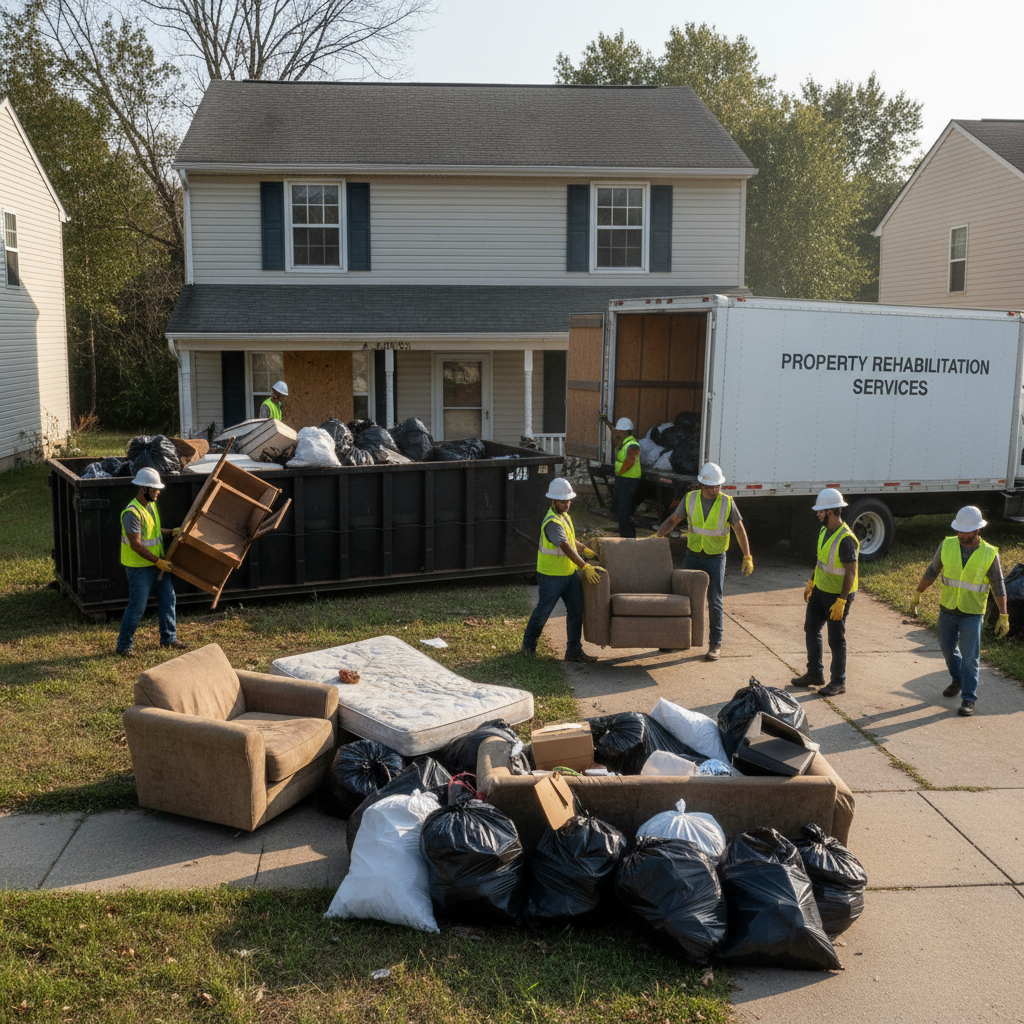
Foreclosure Cleanup and Trash-Out Services: What Lenders Need to Know
When a property goes into foreclosure and the previous occupants leave, they often leave behind a significant amount of debris, personal property, and sometimes hazardous materials. The process of removing this material — known in the industry as "trash-out" — is a critical first step in preparing a foreclosed property for preservation, sale, or reoccupation.
For lenders, servicers, and REO asset managers, understanding the trash-out process is essential for managing REO portfolios efficiently and in compliance with regulations.
What Is a Foreclosure Trash-Out?
A foreclosure trash-out (also called a clean-out or debris removal) is the process of removing all abandoned personal property, debris, and hazardous materials from a foreclosed property. This includes:
Interior Trash-Out
- Abandoned furniture and appliances
- Personal belongings left behind
- Household trash and debris
- Construction debris from incomplete renovations
- Abandoned vehicles in garages
- Food and perishables (often spoiled)
- Clothing and household items
- Books, electronics, and miscellaneous personal property
Exterior Cleanup
- Yard debris and overgrowth
- Abandoned vehicles
- Construction materials
- Trash and dumping debris
- Abandoned structures (sheds, playsets)
- Tires, appliances, and large items
Hazardous Material Removal
- Paints and solvents
- Chemicals and cleaning supplies
- Automotive fluids
- Pesticides and herbicides
- Medical waste
- Asbestos-containing materials
- Mold-contaminated materials
Why Professional Trash-Out Matters
Legal Compliance
Removing personal property from a foreclosed property is governed by state law. Most states require:
- Notice to occupants before removal (typically 15-30 days after eviction or abandonment)
- Inventory of personal property with photographs
- Storage period for valuable items (typically 15-30 days)
- Proper disposal methods for hazardous materials
- Documentation of the entire process
Failure to follow these legal requirements can result in lawsuits from former occupants, fines from regulatory agencies, and liability for improper disposal.
Health and Safety
Foreclosed properties often contain health and safety hazards:
- Biohazards — Spoiled food, human or animal waste, needle
- Mold — Often extensive in properties with water damage
- Structural hazards — Damaged floors, stairs, or walls
- Pest infestations — Rodents, insects, and sometimes animals trapped inside
- Chemical hazards — Improperly stored chemicals and solvents
- Physical hazards — Broken glass, exposed nails, unstable structures
Professional trash-out crews are trained and equipped to handle these hazards safely.
Asset Value Protection
A cluttered, dirty property is worth less than a clean one. Professional trash-out:
- Improves curb appeal for faster sale
- Reveals hidden damage that needs repair
- Prevents further damage from accumulated debris
- Creates a blank canvas for repairs and staging
- Enables proper inspection of all areas
Speed to Market
Properties can't be properly inspected, repaired, or listed until they're cleaned out. Delays in trash-out extend the entire REO timeline:
- Inspection can't be completed until debris is removed
- Repairs can't begin until the property is accessible
- Appraisals are affected by property condition
- Showings are impossible with debris present
The Professional Trash-Out Process
Step 1: Initial Assessment
Before beginning the trash-out, a professional crew will:
- Conduct a walk-through assessment of the entire property
- Document existing conditions with photographs
- Identify hazardous materials requiring special handling
- Estimate debris volume (typically measured in cubic yards)
- Determine equipment and crew needs
- Identify items that may have value and should be separated
Step 2: Inventory and Documentation
For legal compliance:
- Photograph all personal property before removal
- Create an itemized inventory of valuable items
- Document the condition of the property before work begins
- Note any pre-existing damage
- Record the date and time of the trash-out
Step 3: Hazard Identification and Mitigation
Before beginning removal:
- Identify and isolate hazardous materials
- Arrange for specialized disposal of hazardous waste
- Address immediate safety hazards
- Set up containment for mold-contaminated materials
- Ensure proper PPE for all crew members
Step 4: Removal and Sorting
During the trash-out:
- Remove debris room by room
- Sort items by disposal method (trash, recycling, donation, hazardous waste, valuable items)
- Separate personal property that must be stored per state law
- Load debris into appropriate containers (dumpsters, trucks)
- Clean each room as it's emptied
Step 5: Disposal
Proper disposal is critical:
- General debris — Hauled to licensed landfill or transfer station
- Recyclable materials — Separated and taken to recycling facilities
- Hazardous waste — Disposed at licensed hazardous waste facilities with documentation
- Valuable items — Stored per legal requirements with documented chain of custody
- Appliances — Often require special handling for refrigerants
- Electronics — May require e-waste recycling
Step 6: Final Cleaning
After debris removal:
- Sweep and vacuum all floors
- Clean all surfaces
- Address any odors
- Disinfect contaminated areas
- Remove cobwebs and debris from corners
- Clean windows and entry doors
- Ensure the property is ready for inspection or repair
Step 7: Documentation
After completion:
- Take after photos of all areas
- Document debris volume removed (with disposal receipts)
- Provide a completion report with inventory of items stored
- Update property condition records
- Store all documentation for legal compliance
How Much Does a Foreclosure Trash-Out Cost?
Trash-out costs vary based on several factors:
Factors Affecting Cost
- Debris volume — The primary cost driver (measured in cubic yards)
- Property size — Larger properties take longer to clear
- Hazardous materials — Require specialized handling and disposal
- Accessibility — Difficult access increases labor time
- Location — Disposal fees vary by region
- Crew size needed — Based on debris volume and timeline
Typical Cost Ranges
- Light trash-out (<5 cubic yards): $300-$800
- Moderate trash-out (5-15 cubic yards): $800-$2,000
- Heavy trash-out (15-30 cubic yards): $2,000-$4,500
- Extreme trash-out (30+ cubic yards, hoarding situations): $4,500-$15,000+
- Hazardous material removal: Additional $500-$5,000+ depending on material
These costs are typically billed to the property owner (lender or servicer) as part of the REO preservation process.
Choosing a Trash-Out Service Provider
When evaluating trash-out contractors, look for:
Licensing and Insurance
- State contractor's license (where required)
- General liability insurance ($1M minimum)
- Workers' compensation insurance
- Auto insurance for company vehicles
- Hazardous waste handling certification (if applicable)
Experience and Capability
- Experience with foreclosure and REO properties
- Trained crews for hazardous material handling
- Proper equipment (trucks, dumpsters, PPE)
- Ability to handle large-volume jobs
- Understanding of state-specific legal requirements
Documentation and Reporting
- Photo documentation (before, during, after)
- Itemized inventory of removed items
- Disposal receipts and manifests
- Completion reports with debris volume
- Legal compliance documentation
Professionalism and Reliability
- Background-checked crews
- Uniformed personnel with identification
- Drug testing program
- On-time performance
- Responsive communication
The Auxi Trash-Out Solution
Auxi Services provides professional foreclosure cleanup and trash-out services nationwide:
Comprehensive Service
- Full interior and exterior trash-out
- Hazardous material identification and removal
- Personal property inventory and storage (per state law)
- Final cleaning and disinfection
- Debris disposal with proper documentation
Professional Crews
- Licensed, insured, and background-checked
- Trained in hazardous material handling
- Equipped with proper PPE and equipment
- Experienced with REO and foreclosure properties
- Uniformed and professional
Complete Documentation
- Before, during, and after photos
- Itemized inventory of removed items
- Disposal receipts and manifests
- Completion reports with debris volume
- Legal compliance documentation
Nationwide Coverage
- Licensed crews in all 50 states
- Understanding of state-specific legal requirements
- Local disposal relationships for cost-effective service
- Rapid response for time-sensitive situations
Integrated Platform
- Work orders tracked through the Auxi platform
- Real-time status updates
- Photo documentation uploaded from the field
- Integration with other preservation services (securing, winterization, maintenance)
- Compliance reporting for investors and regulators
Conclusion
Foreclosure cleanup and trash-out is a critical first step in the REO preservation process. It's not just about removing debris — it's about legal compliance, safety, asset value protection, and speed to market. Professional trash-out services protect lenders from liability, reveal the true condition of properties, and prepare them for the next steps in the preservation and sale process.
Auxi Services provides comprehensive trash-out services as part of our nationwide property preservation offering. Contact us to learn how we can manage the entire preservation process for your REO portfolio.