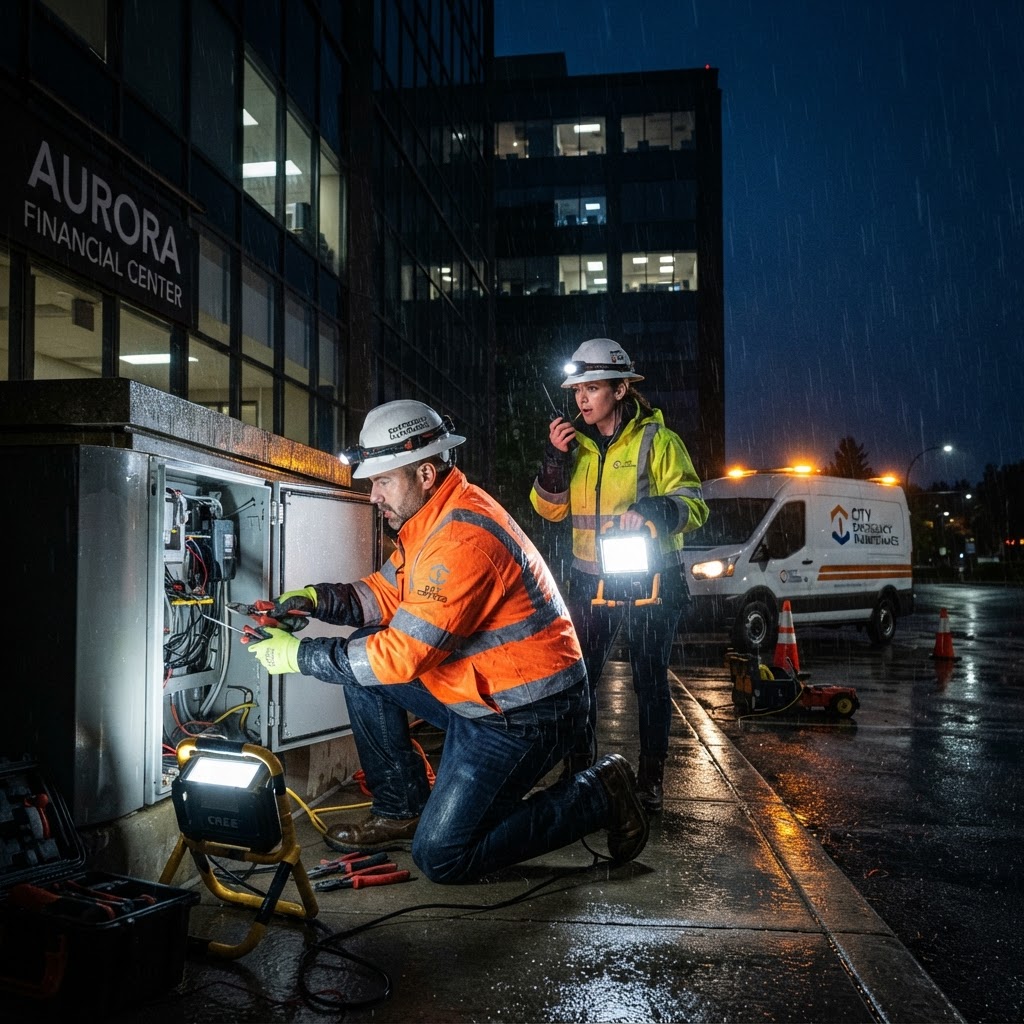
Emergency Property Maintenance: Rapid Response for Commercial Real Estate
When a commercial property experiences an emergency — a burst pipe, storm damage, fire, or break-in — every hour counts. Delayed response can turn a manageable incident into a catastrophic loss. For property managers, lenders, and institutional owners, having a reliable emergency maintenance partner with 24/7 rapid response capability is essential for protecting asset value and minimizing liability.
What Constitutes a Property Maintenance Emergency?
Not every maintenance issue is an emergency. True emergencies threaten life safety, cause active damage, or create immediate legal exposure. Common commercial property emergencies include:
Water Intrusion and Flooding
- Burst or frozen pipes
- Roof leaks during storms
- Sprinkler system activations
- Plumbing fixture failures
- Sewage backups
A single burst pipe can release 10-50 gallons per minute. In a commercial property, water can spread across thousands of square feet within hours, damaging drywall, flooring, electrical systems, and inventory. Response within the first hour can reduce total damage by up to 70%.
Storm and Weather Damage
- Wind damage to roofing and siding
- Fallen trees or limbs
- Hail damage
- Ice dam formation
- Flooding from heavy rainfall
Storm damage often creates secondary risks: exposed interiors, compromised structural integrity, and security vulnerabilities that worsen rapidly if not addressed.
Fire and Smoke Damage
- Active fire suppression
- Post-fire board-up and securing
- Smoke remediation
- Water extraction from firefighting
- Structural assessment
Security Breaches
- Break-ins and vandalism
- Squatter occupation
- Damaged doors or windows
- Compromised alarm systems
HVAC Failure (Extreme Temperatures)
- Complete system failure in summer heat
- Heating failure in winter cold
- Data center or server room cooling failures
- Temperature-sensitive facility emergencies
The Cost of Delayed Emergency Response
Direct Damage Escalation
Water damage is the most time-sensitive emergency. Here's how damage escalates:
- Within minutes: Water spreads, saturating carpets, drywall, and insulation
- Within hours: Furniture and finishes begin to stain and swell; drywall begins to soften
- Within 24 hours: Mold can begin colonizing wet surfaces; metal surfaces begin to rust
- Within 48 hours: Mold becomes visible; structural materials begin to warp; odors develop
- Within 72 hours: Mold contamination may require professional remediation; structural damage may be irreversible
- After 1 week: Full-scale mold remediation required; extensive structural replacement likely; property may be uninhabitable
Business Interruption Costs
For commercial properties, every hour of downtime costs money:
- Retail stores lose revenue every hour they're closed
- Office buildings lose tenant productivity
- Healthcare facilities risk patient safety
- Warehouses may lose perishable inventory
- Restaurants risk food safety violations and inventory loss
Insurance Implications
Most commercial property insurance policies require:
- Prompt notification of damage (often within 24-72 hours)
- Reasonable mitigation efforts to prevent further damage
- Documentation of damage and response actions
Failure to respond promptly or document adequately can result in claim denials or reduced payouts.
Building an Emergency Response Plan
1. Pre-Identify Emergency Vendors
Don't wait for an emergency to find a vendor. Pre-vet and establish relationships with:
- 24/7 water damage restoration companies
- Emergency board-up and securing contractors
- HVAC repair services
- Roofing contractors for temporary repairs
- Security companies for emergency response
- Electrical contractors
- Plumbing contractors
2. Establish Response Protocols
Define clear protocols for different emergency types:
- Who to call — Primary and backup emergency contacts
- Authorization limits — Who can approve emergency spending and up to what amount
- Response time expectations — Target on-site time for each emergency type
- Documentation requirements — Photos, condition reports, and action logs
- Tenant/occupant notification — Who communicates with building occupants
- Insurance notification — When and how to notify the insurance carrier
3. Implement a 24/7 Dispatch System
Emergencies don't follow business hours. Ensure you have:
- A 24/7 emergency hotline or dispatch service
- Automated alerting for after-hours emergencies
- Pre-established vendor call-down lists
- Mobile-accessible emergency protocols
4. Maintain Property Information
Emergency responders need immediate access to:
- Utility shut-off locations (water, gas, electric)
- Building access instructions (keys, codes, lockbox locations)
- Building systems diagrams
- Emergency contact list for tenants
- Hazardous material locations
- Fire suppression system information
The Auxi Emergency Response Solution
Auxi Services provides 24/7 emergency property maintenance nationwide with:
Rapid Dispatch
- 24/7 emergency hotline with live dispatchers
- Average response time under 4 hours nationwide
- 1-hour response in major metro areas
- Pre-positioned vendor crews in all 50 states
Comprehensive Services
- Emergency board-up and securing
- Water extraction and drying
- Temporary roof repairs and tarping
- HVAC emergency repair
- Debris removal and hazard mitigation
- Security and surveillance deployment
Documentation and Compliance
- Real-time photo documentation from on-site crews
- Detailed condition reports within 2 hours of arrival
- Insurance-ready documentation packages
- Complete audit trail of all response actions
Coordination and Communication
- Single point of contact for all emergency services
- Real-time status updates through the Auxi platform
- Automatic notification of stakeholders
- Post-emergency follow-up and repair planning
Case Example: Multi-Site Storm Response
A hurricane affected 47 commercial properties across a 200-mile corridor. The property owner called Auxi's emergency line within an hour of the storm passing. Here's how the response unfolded:
Hours 0-4:
- Auxi dispatch mobilized 15 vendor crews from surrounding states
- Initial damage assessments began on the 10 most severely damaged properties
- Emergency board-up and tarping started on properties with active water intrusion
Hours 4-12:
- All 47 properties assessed and triaged by severity
- 23 properties with active water intrusion receiving emergency mitigation
- Security deployed to 8 properties with compromised access
- Daily status reports initiated for the property owner and insurance carrier
Hours 12-72:
- Water extraction and drying equipment deployed to all affected properties
- Temporary repairs completed on all damaged roofs
- Full insurance documentation packages delivered
- Repair planning initiated for permanent restoration
Result: The property owner avoided an estimated $2.1 million in additional damage through rapid response and mitigation. Insurance claims were processed 3 weeks faster than typical due to complete documentation.
Conclusion
Emergency property maintenance is about preparation as much as response. Property owners who pre-plan their emergency response — vetting vendors, establishing protocols, and maintaining property information — recover faster, spend less, and face fewer complications when emergencies strike.
Auxi Services provides the 24/7 emergency response capability, national vendor network, and comprehensive documentation that commercial property owners need. Contact us to develop your emergency response plan before you need it.