Emergency Preparedness for Commercial Properties: A Complete Response Guide
Commercial property emergencies — from water leaks and fires to severe storms and power outages — can cause $10,000 to $1,000,000+ in damage if not addressed within hours. This guide covers emergency preparedness planning, response protocols, and vendor coordination for commercial property managers.
Types of Commercial Property Emergencies
Water-Related Emergencies
- Burst pipes and major leaks — $10,000-$100,000+ in damage per incident
- Roof failures during storms — Water intrusion damages interiors, equipment, and inventory
- Sewage backups — Health hazards requiring immediate remediation
- Flooding — Natural or plumbing-related, requires rapid water extraction
- Fire suppression system discharge — Accidental or fire-triggered flooding
Fire and Smoke Emergencies
- Building fires — Structural damage, smoke infiltration, water damage from suppression
- Kitchen fires — Common in multifamily and restaurant properties
- Electrical fires — Require specialized response, can trigger throughout building
Storm and Weather Emergencies
- Hurricane and tornado damage — Roof, window, and structural damage
- Hail damage — Roof and exterior damage often not immediately visible
- Ice storms — Power outages, frozen pipes, tree damage
- Flooding — Interior damage, mold risk, structural concerns
System Failure Emergencies
- HVAC failure in extreme weather — Health risk, especially in senior living and healthcare
- Power outages — Food safety, security, life safety systems
- Elevator failures — Trapped occupants, ADA accessibility issues
- Gas leaks — Evacuation and explosion risk
Security Emergencies
- Break-ins and vandalism — Property damage, security breaches
- Active threats — Require lockdown protocols
- Cybersecurity attacks — Building management system breaches
Emergency Preparedness Planning
Step 1: Risk Assessment
Evaluate your property's specific risks:
- Geographic hazards (flood zones, hurricane paths, earthquake zones)
- Building age and system condition
- Occupant vulnerability (seniors, healthcare, retail)
- Historical incident data
- Insurance coverage gaps
Step 2: Emergency Response Plan
Create a documented plan including:
- Emergency contact tree — Property manager, maintenance, vendors, insurance, tenants
- Shut-off locations — Water, gas, electric, fire suppression — clearly labeled and accessible
- Evacuation routes and assembly points — Posted on every floor
- Emergency vendor list — Pre-vetted contractors for each emergency type
- Tenant communication protocol — Mass notification system, contact lists
- Insurance claim procedures — Documentation requirements, adjuster contacts
- Business continuity plan — Temporary relocation, alternate operations
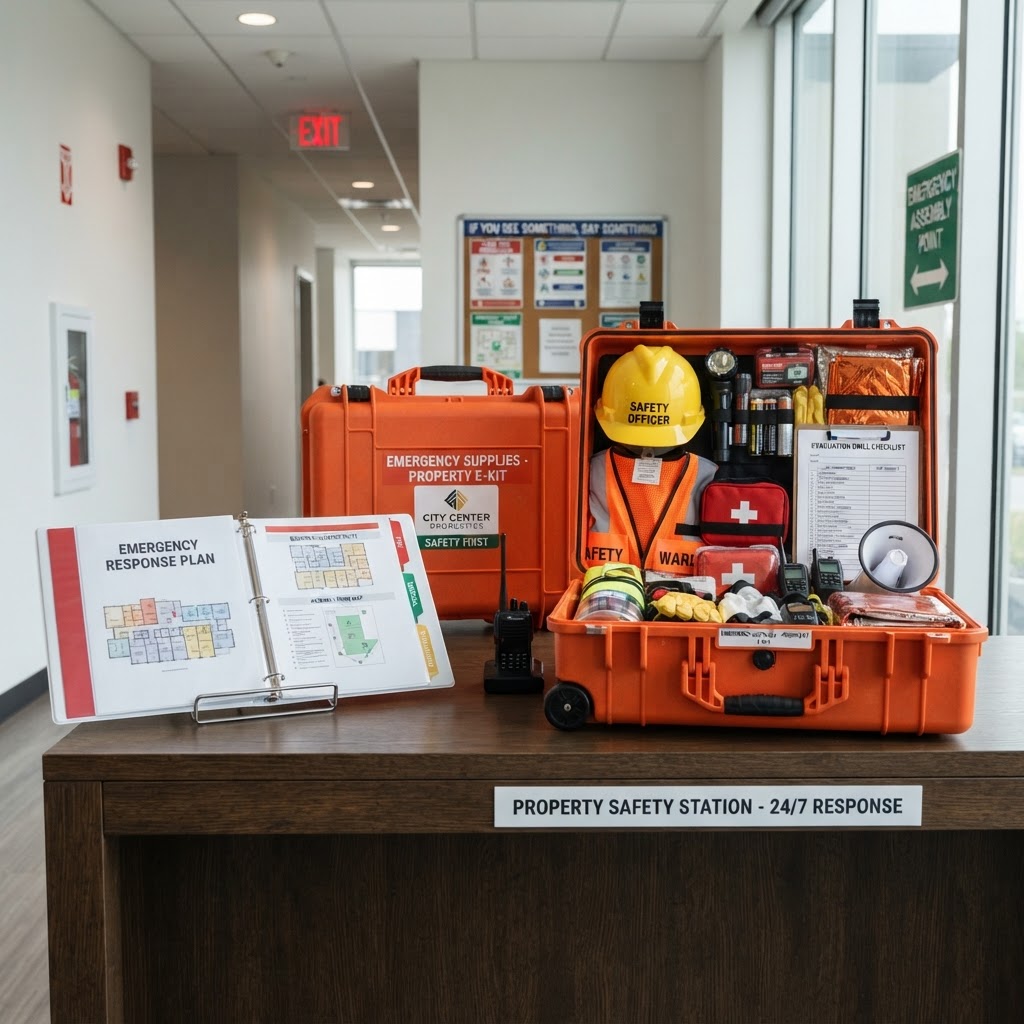
Step 3: Emergency Kit and Equipment
Maintain on-site:
- Wet/dry vacuum and fans
- Tarps, sandbags, and plywood
- Basic hand tools and shovels
- First aid kits (multiple locations)
- Flashlights and emergency lighting
- Water extraction pump
- Emergency contact signage
- Property maps and shut-off diagrams
Step 4: Vendor Pre-Qualification
Establish relationships with emergency vendors BEFORE you need them:
- Water damage restoration — 24/7 availability, IICRC certified
- Emergency plumbers — Rapid response, licensed and insured
- Roofing contractors — Tarping and emergency repair capability
- Board-up services — For broken windows and doors
- HVAC emergency service — Commercial-grade, 24/7
- Electrical contractors — Emergency electrical repair
- Tree removal — For storm damage clearance
- Security services — Temporary guards for compromised properties
Step 5: Staff Training
Train on-site staff on:
- Emergency shut-off procedures
- Evacuation protocols and assembly points
- Emergency contact list usage
- Basic first aid and CPR
- Documentation procedures (photos, reports)
- Emergency vendor coordination
- Tenant communication during emergencies
Emergency Response Protocols
Water Leak / Pipe Burst
- Immediate — Shut off water at nearest valve or main
- Within 15 minutes — Cut electricity to affected area, begin water extraction
- Within 1 hour — Contact water damage restoration vendor, document damage
- Within 4 hours — Begin dehumidification, contact insurance
- Within 24 hours — Full assessment, remediation plan, tenant communication
Storm Damage
- Before storm — Secure loose items, verify emergency supplies
- During storm — Monitor conditions, ensure occupant safety
- Within 1 hour of safe passage — Initial damage assessment
- Within 4 hours — Emergency stabilization (tarps, board-up)
- Within 24 hours — Full documentation, insurance notification, vendor scheduling
- Within 48 hours — Begin permanent repairs, ongoing monitoring
Fire Response
- Immediate — Evacuate building, call 911
- After clearance — Document all damage with photos and video
- Within 24 hours — Contact insurance, secure property (board-up if needed)
- Within 48 hours — Water extraction (from suppression), smoke remediation begins
- Within 1 week — Full damage assessment, restoration plan, tenant communication
Documentation for Insurance Claims
Thorough documentation is critical for insurance claims:
- Photos and video — Before, during, and after mitigation
- Timestamps — All actions and communications logged
- Mitigation records — Show you took reasonable steps to minimize damage
- Vendor invoices and reports — Professional documentation of work performed
- Tenant communications — Written records of all notifications
- Inspection reports — Professional assessments of damage and cause
Cost of Unpreparedness
- Delayed water response — Every hour of standing water increases mold risk and damage cost by 10-15%
- No emergency vendor — Finding qualified vendors during an emergency costs 2-3x normal rates
- Poor documentation — Insurance claims denied or underpaid by 30-50%
- No emergency plan — Response time increases by 3-5x, dramatically increasing damage
Conclusion
Emergency preparedness is not optional for commercial property managers. A documented emergency plan, pre-qualified vendor relationships, trained staff, and proper documentation procedures can reduce emergency damage costs by 50-80% and ensure faster insurance claim processing. Invest in preparedness before the emergency — not during it.