Emergency Maintenance Response Times: What Property Managers Need to Know
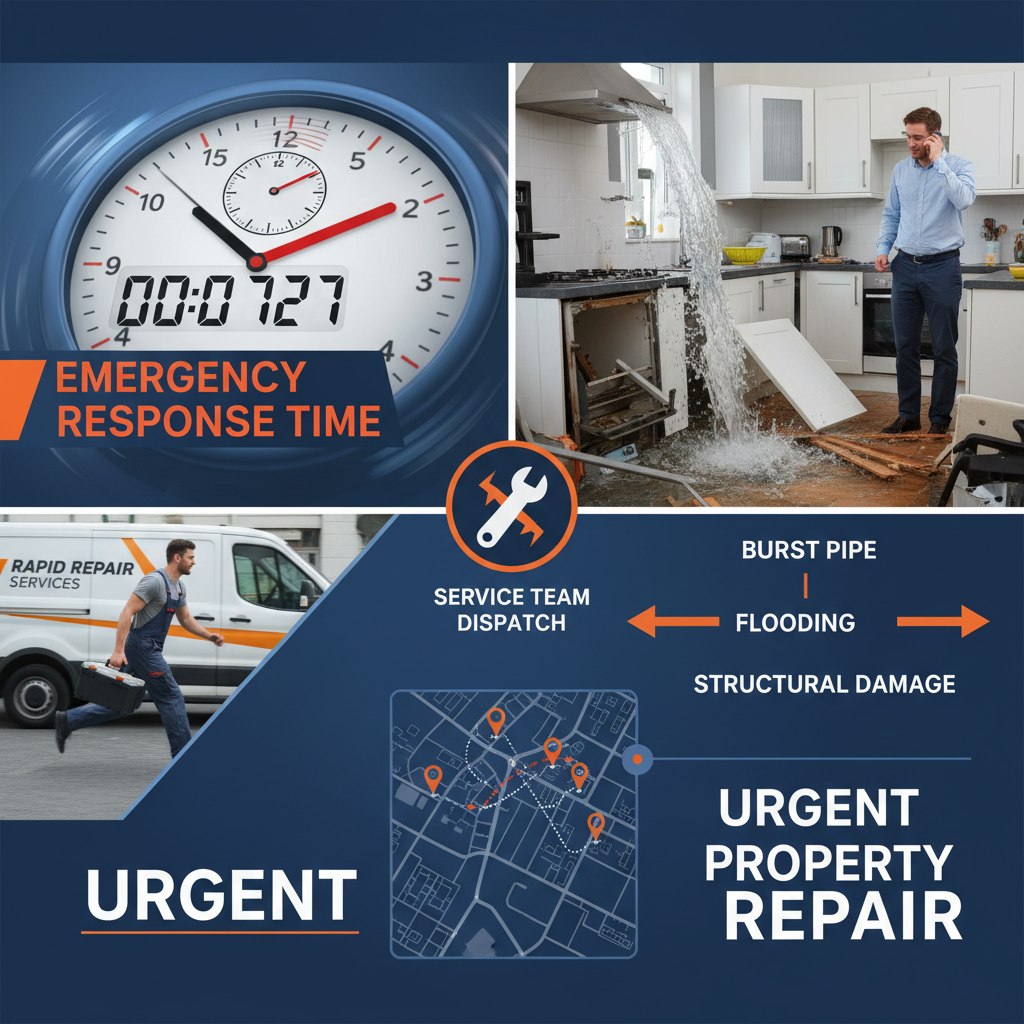
When a pipe bursts at 2 AM or a HVAC system fails during a summer heatwave, emergency maintenance response time becomes the difference between a minor inconvenience and a catastrophic loss. For property managers, understanding what constitutes acceptable response times—and how to achieve them—protects both tenants and the bottom line.
What Qualifies as a Maintenance Emergency?
True Emergencies (Immediate Response Required)
- Water leaks or flooding: Active water intrusion causing damage
- Gas leaks: Smell of gas or suspected leak
- Electrical hazards: Sparking, burning smell, or power outages
- Fire safety system failures: Sprinkler or alarm malfunctions
- Security breaches: Broken locks, broken windows, entry door failures
- Heating failure in winter: Indoor temps below 55°F
- Cooling failure in summer: Indoor temps above 85°F in occupied units
- Sewage backups: Raw sewage in living spaces
Urgent (Not Life-Safety, But Time-Sensitive)
- Appliance failures: Refrigerator, stove, or water heater
- Partial plumbing issues: Single fixture outages
- HVAC issues in mild weather: Comfort but not safety concern
- Pest infestations: Active infestations requiring treatment
Non-Emergency (Standard Service Window)
- Cosmetic issues: Paint touch-ups, minor drywall damage
- Preventive maintenance: Scheduled servicing
- Upgrade requests: Tenant-requested improvements
Industry Standard Response Times
| Priority Level | Response Time Target | Resolution Target | |---|---|---| | Emergency (life/safety) | Under 1 hour | Same day | | Emergency (property damage) | Under 2 hours | 24 hours | | Urgent | Under 4 hours | 48 hours | | Standard | Under 24 hours | 5-7 days | | Scheduled | N/A | Per schedule |
The True Cost of Slow Emergency Response
Direct Costs
- Property damage: Water damage can cause $5,000-$50,000+ in repairs if not addressed within hours
- Emergency premium: After-hours and emergency service calls cost 2-3x standard rates
- Equipment replacement: Failed equipment that isn't repaired quickly often requires full replacement
Indirect Costs
- Tenant turnover: Tenants who experience slow emergency response are 3x more likely to not renew
- Reputation damage: Negative reviews citing poor response times deter prospective tenants
- Legal liability: Certain emergencies (heat, safety systems) have legal response requirements
- Insurance claims: Frequent damage claims can increase premiums
Building an Emergency Response Plan
1. Define Emergency Categories
Clearly categorize what constitutes each priority level so on-call staff and vendors respond appropriately.
2. Establish an After-Hours Protocol
- Who receives emergency calls? (answering service, on-call staff, vendor dispatch)
- How are tenants instructed to report emergencies?
- What is the escalation path if the primary contact doesn't respond?
3. Pre-Qualify Emergency Vendors
Maintain a list of vetted vendors for each emergency trade:
- 24/7 plumbers
- Emergency electricians
- HVAC emergency service
- Water damage restoration
- Board-up and securing services
- Tree removal (for storm damage)
4. Create Tenant Communication Templates
Pre-draft messages for common emergencies:
- "We are aware of the issue and a technician is en route."
- "The issue has been resolved. Please verify in your unit."
- "We need access to your unit for emergency repairs. Please contact us."
5. Document Everything
For every emergency call, record:
- Time of tenant report
- Time of vendor dispatch
- Time of vendor arrival
- Description of issue and resolution
- Photos before and after
- Final cost and invoice
Reducing Emergency Frequency
The best emergency response is preventing the emergency in the first place:
Preventive Maintenance Programs
- HVAC: Biannual inspections catch 80% of potential failures before they occur
- Plumbing: Annual inspections identify corroded pipes and failing fixtures
- Roofing: Semi-annual inspections prevent 90% of roof leak emergencies
- Electrical: Annual panel inspections reduce fire risk
Tenant Education
Provide tenants with:
- Clear guidelines on what constitutes an emergency
- Instructions for shutting off water/gas in emergencies
- Contact information for after-hours emergencies
- Reminder to report small issues before they become emergencies
Smart Monitoring
Install IoT sensors that detect:
- Water leaks (under sinks, near water heaters, in basements)
- Temperature extremes (protecting pipes from freezing)
- Humidity spikes (indicating leaks or HVAC issues)
- Door/window sensors (security)
Common Emergency Scenarios and Response
Burst Pipe
- Immediate: Instruct tenant to shut off water at the main valve
- Within 1 hour: Plumber on-site to assess and repair
- Within 2 hours: Water extraction service if flooding occurred
- Within 24 hours: Dehumidifiers running to prevent mold
- Within 72 hours: Drywall inspection and repair scheduling
HVAC Failure in Summer
- Immediate: Verify the failure and check for simple fixes (tripped breaker, thermostat)
- Within 2 hours: HVAC technician dispatched
- Within 4 hours: Diagnosis and temporary solution (portable AC if repair takes time)
- Same day: Repair completed or temporary cooling provided
Sewage Backup
- Immediate: Evacuate affected area, shut off water if needed
- Within 1 hour: Emergency plumber on-site
- Within 2 hours: Cleanup and sanitation service dispatched
- Within 24 hours: Area cleaned, sanitized, and dried
- Within 48 hours: Repairs completed and area safe for occupancy
How Auxi Services Handles Emergencies
Our emergency response system is designed for property managers who need reliable, fast resolution:
- 24/7 dispatch: Emergency calls are answered and dispatched around the clock
- Pre-vetted emergency vendors: Our network includes licensed 24/7 plumbers, electricians, and HVAC technicians in every market
- Average sub-2-hour response: Our vendors are committed to rapid emergency response
- Photo-verified resolution: Every emergency repair is documented with before/after photos
- Transparent pricing: Emergency rates are disclosed upfront—no surprise invoices
- Insurance documentation: We provide detailed reports for insurance claims
- Nationwide coverage: Consistent emergency response across all your properties
Measuring Your Emergency Response Performance
Track these metrics monthly:
- Average response time: Time from tenant call to vendor on-site
- First-time fix rate: Percentage of emergencies resolved on the first visit
- After-hours call volume: Lower numbers indicate better preventive maintenance
- Cost per emergency: Track trends to identify properties with recurring issues
- Tenant satisfaction post-emergency: Survey tenants after resolution
Conclusion
Emergency maintenance response time is a critical metric for property managers. By understanding what constitutes acceptable response times, building a comprehensive emergency plan, and partnering with a reliable vendor network like Auxi Services, you can protect your properties, your tenants, and your reputation.
Don't wait for the next emergency to find a reliable vendor. Contact Auxi Services to pre-qualify your emergency response team today.