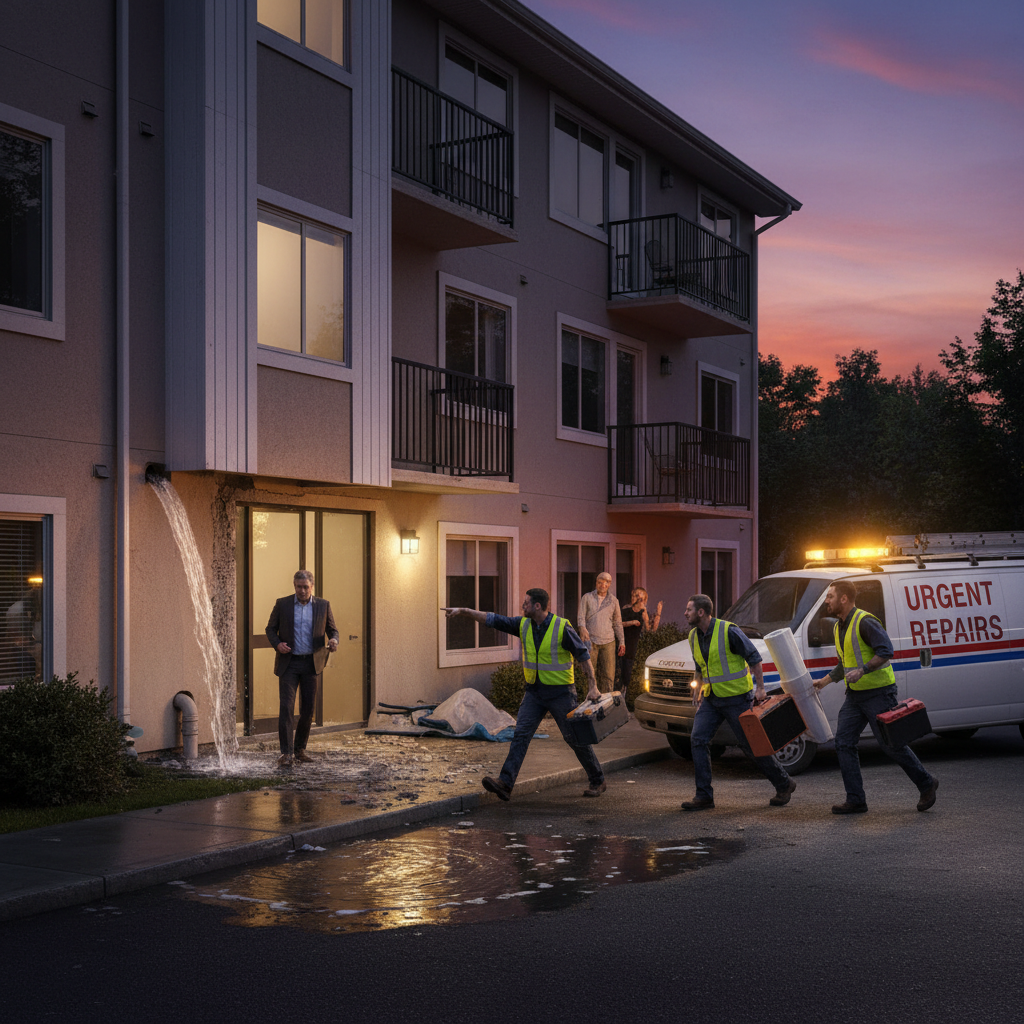
Emergency Maintenance Response Times: What Your Tenants Actually Expect
When a pipe bursts at 2 AM or the heat goes out in January, your tenants expect a fast response. But what does "fast" actually mean — and how can property management teams deliver without burning out their maintenance staff?
What Tenants Consider an Emergency
Before discussing response times, it's important to define what qualifies as an emergency. Most tenants consider these situations emergencies:
- No heat (in winter)
- No AC (in extreme heat)
- Water leaks or flooding
- Sewage backup
- Gas leak or smell
- Electrical sparking or outage
- Broken locks or security issues
- Refrigerator failure
Non-emergencies include dripping faucets, slow drains, squeaky doors, and cosmetic issues. Setting clear expectations with tenants about what constitutes an emergency helps reduce after-hours calls.
The 4-Hour Benchmark
Industry research shows that tenants expect emergency maintenance to be addressed within 4 hours of reporting. For true emergencies (gas leaks, flooding), the expectation drops to 1 hour or less.
Response Time Benchmarks
| Severity | Tenant Expectation | Industry Best Practice | |---|---|---| | Life/safety emergency | Under 1 hour | 30–60 minutes | | Major emergency (flood, no heat) | 1–2 hours | 1–2 hours | | Moderate emergency (appliance failure) | 2–4 hours | 2–4 hours | | Urgent (non-emergency) | 24 hours | Same day | | Routine | 3–5 days | 3–5 business days |
Why Most Teams Miss the Mark
1. No After-Hours Coverage
Many property management companies rely on a single on-call maintenance tech. When that person is unavailable, response times balloon.
2. Vendor Communication Gaps
Even if you have a vendor list, calling them one by one at 2 AM is inefficient. If the first three don't answer, you've already blown the response window.
3. Lack of Triage
Without a system to categorize urgency, everything feels like an emergency. Your team ends up treating a dripping faucet with the same urgency as a burst pipe.
Building a Response System That Works
Step 1: Create a Triage System
Classify incoming maintenance requests by severity. Use a simple tier system:
- Tier 1 (Emergency): Immediate response required — dispatch within 30 minutes
- Tier 2 (Urgent): Same-day response — dispatch within 4 hours
- Tier 3 (Routine): Schedule within 3–5 business days
Step 2: Build a Vetted Vendor Network
Don't rely on a single vendor. Build a network of pre-vetted, 24/7-available service providers across multiple trades:
- Plumbing (24/7 emergency)
- HVAC (24/7 emergency)
- Electrical (24/7 emergency)
- General maintenance/handyman
- Water damage restoration
- Locksmith/security
Step 3: Use Automated Dispatch
A vendor management platform can automatically route emergency work orders to available, nearby vendors. Instead of calling down a list, the system notifies all qualified vendors simultaneously — first to accept gets the job.
Step 4: Set Up Tenant Communication
The biggest complaint tenants have isn't slow response — it's no communication. Even if you can't fix the problem immediately, acknowledging the request and providing a timeline dramatically improves satisfaction.
Send automated updates:
- "Your emergency request has been received — a vendor is being dispatched."
- "Vendor [Name] is en route, ETA: [Time]."
- "Issue resolved. Please confirm the repair is satisfactory."
Step 5: Track and Improve
Measure your average response times monthly. Identify patterns:
- Which types of emergencies take longest to resolve?
- Are there specific times of day/week where response is slowest?
- Which vendors consistently meet the response window?
How Auxi Services Helps
Auxi Services provides a vendor management platform specifically designed for property maintenance:
- 24/7 emergency dispatch — Submit a work order anytime; vetted vendors respond immediately
- Automated vendor matching — The platform identifies the nearest qualified vendor for the job
- Real-time tracking — See vendor ETA, progress photos, and completion status
- Tenant communication — Automated status updates keep residents informed
- Free for property managers — No platform fees, ever
Cost of Poor Response Times
Failing to respond quickly to emergencies has real costs:
- Property damage — A small leak becomes a $10,000 water damage repair
- Tenant turnover — 68% of tenants who leave cite poor maintenance as a primary reason
- Legal liability — In many states, failure to address heat/hot water issues within 24 hours allows tenants to withhold rent
- Reputation damage — One viral negative review about slow emergency response can cost prospective tenants
Ready to Improve Your Emergency Response?
Don't wait for the next 2 AM call to realize your system has gaps. Contact Auxi Services to build your emergency vendor network today — it's free to get started.