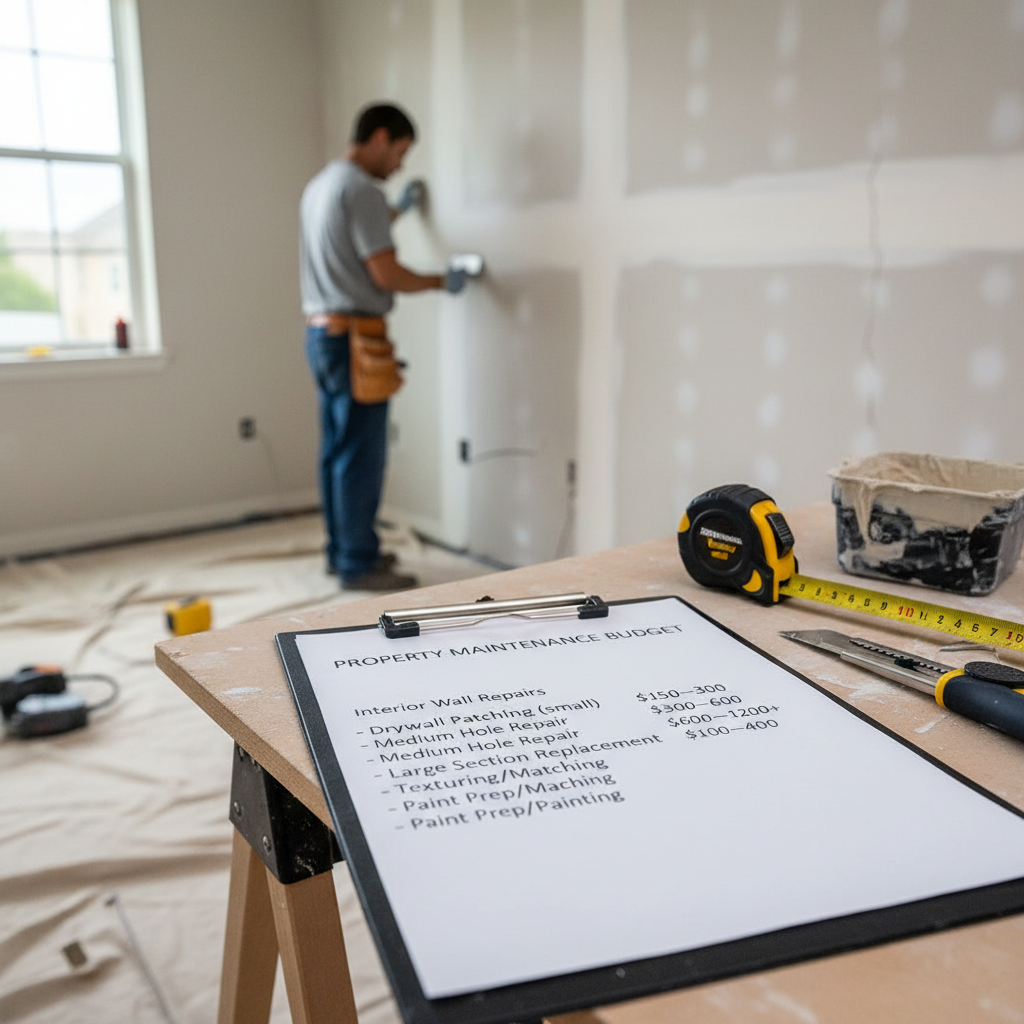
Drywall Repair Costs: What Property Managers Should Budget in 2026
Drywall repair is one of the most common maintenance expenses for property managers. From minor nail hole patches to full wall replacements after water damage, understanding drywall repair costs helps you budget accurately and avoid overpaying vendors.
Average Drywall Repair Costs
The cost of drywall repair varies significantly based on the extent of damage, location, accessibility, and whether the repair includes matching texture and paint.
Cost by Repair Type
| Repair Type | Cost Range | Description | |---|---|---| | Nail hole / small puncture | $75-$150 | Patch and paint small holes | | Medium hole (6-12 inches) | $150-$300 | Mesh patch, mud, sand, paint | | Large hole (12+ inches) | $300-$600 | Cut and replace drywall section | | Water damage (per sheet) | $200-$500 | Remove damaged section, replace | | Full wall replacement (per sheet) | $150-$300 | Remove old, install new, finish | | Ceiling repair | $300-$800 | Higher due to accessibility | | Texture matching | $50-$150 | Match existing wall texture | | Corner bead repair | $100-$250 | Replace damaged corner bead |
Cost by Property Type
| Property Type | Avg Cost Per Turnover | Notes | |---|---|---| | Multifamily apartment | $150-$400 | 2-3 wall repairs + paint touch-ups | | Single-family rental | $200-$500 | Larger wall areas | | Commercial office | $300-$800 | Higher quality finish requirements | | Retail space | $250-$600 | Includes display wall repairs |
Factors That Affect Drywall Repair Costs
1. Extent of Damage
The size and depth of damage directly determines material and labor costs. A small nail hole takes 30 minutes; a large water-damaged section may require multiple visits for drying, replacement, and finishing.
2. Accessibility
- Standard walls (8ft): Easiest to access, lowest cost
- High ceilings (10ft+): Requires ladders or scaffolding, 20-40% premium
- Stairwells: Difficult access, 30-50% premium
- Behind fixtures: Removing/reinstalling fixtures adds labor
- Tight spaces: Closets, attics, crawl spaces add complexity
3. Texture Matching
Matching existing texture is often the most challenging part of drywall repair:
- Smooth wall: Easiest to match
- Orange peel: Moderate difficulty
- Knockdown: Moderate difficulty
- Popcorn ceiling: Difficult, requires special equipment
- Hand-troweled: Very difficult, requires skilled artisan
4. Paint Matching
- Same paint available: Minimal cost
- Custom color match: $25-$50 for matching
- Whole wall repaint: $100-$300 to blend repair
- Multiple walls: $200-$600 to ensure consistent finish
5. Moisture and Mold
Water-damaged drywall often requires:
- Moisture inspection ($100-$300)
- Mold remediation ($500-$3,000+ if mold is present)
- Drying time (24-72 hours before repair)
- Source repair (plumbing fix before drywall work)
6. Labor Rates by Region
| Region | Drywall Labor Rate (per hour) | |---|---| | Northeast | $65-$95 | | Southeast | $45-$70 | | Midwest | $45-$65 | | West Coast | $75-$110 | | Mountain West | $50-$75 |
Common Drywall Issues in Multifamily Properties
Move-Out Damage
Tenant move-outs typically produce:
- Nail and screw holes (10-30 per unit)
- Anchor holes for TV mounts
- Door knob holes from door stops
- Scuff marks and gouges
- Pet damage at baseboards
Typical move-out drywall cost: $150-$350 per unit
Water Damage
Sources of water damage:
- Roof leaks (especially in top-floor units)
- Plumbing leaks from above units
- AC condensate line backups
- Window leaks
- Appliance failures (water heater, washing machine)
Typical water damage drywall cost: $300-$1,500 per incident
Settlement Cracks
Common in buildings over 5 years old:
- Hairline cracks at door frames
- Stress cracks at corners
- Ceiling cracks along joints
Typical crack repair cost: $100-$250 per unit
Impact Damage
From furniture moving, tenant accidents, or vandalism:
- Large holes in living areas
- Damage in hallways and stairwells
- Garage wall damage
Typical impact repair cost: $200-$500 per incident
Drywall Repair Process: What to Expect
Step 1: Assessment (30-60 minutes)
- Identify extent of visible damage
- Check for hidden moisture or mold
- Assess underlying cause (if applicable)
- Determine if electrical or plumbing is affected
Step 2: Preparation (1-2 hours)
- Protect flooring and furniture
- Remove damaged drywall
- Address underlying issue (fix leak, etc.)
- Install backing if needed
Step 3: Repair (2-4 hours, may span multiple days)
- Cut replacement drywall to size
- Secure with screws
- Apply joint tape and mud (3 coats)
- Sand between coats
- Match texture
Step 4: Finishing (1-2 hours)
- Prime repaired area
- Paint to match existing wall
- Clean up work area
- Remove debris
Step 5: Inspection (15-30 minutes)
- Verify quality of repair
- Check texture match
- Confirm paint blend
- Photo documentation
When to Repair vs. Replace Drywall
Repair When:
- Damage is less than 12 inches across
- No moisture damage or mold
- Drywall is structurally sound
- Isolated to one or two spots
Replace When:
- Damage exceeds 12 inches or multiple sheets
- Water damage or mold is present
- Drywall is sagging or crumbling
- Extensive cracking throughout
- Building is being renovated
Cost-Saving Strategies
1. Bundle with Paint Refresh
Combining drywall repair with a full unit repaint is more cost-effective than separate projects. The painter is already on-site with materials and equipment.
2. Use a Single Vendor for Make-Ready
A single vendor handling drywall, paint, flooring, and cleaning eliminates coordination overhead and reduces total project cost by 10-15%.
3. Address Issues Early
A $75 nail hole repair prevented during occupancy avoids a $150 move-out repair with additional matching costs.
4. Standardize Materials
Using the same paint color and drywall thickness across all units simplifies repairs and reduces material costs.
5. Preventive Maintenance
Annual inspections catch minor issues before they become major repairs:
- Check for moisture stains quarterly
- Inspect caulking around windows and fixtures
- Monitor for settlement cracks
- Address plumbing leaks immediately
How Auxi Services Reduces Drywall Repair Costs
Our platform helps property managers manage drywall repairs efficiently:
Competitive Bidding
Post a work order and receive bids from multiple vetted vendors—ensuring you get fair, market-rate pricing every time.
Bundled Make-Ready Services
Our vendors can handle drywall, paint, flooring, and cleaning as a single package—reducing coordination costs and turnaround time.
Photo-Verified Quality
Every repair is documented with before/after photos, ensuring quality standards are met before payment.
Transparent Pricing
No hidden fees or surprise charges. You see all bids and approve before work begins.
Nationwide Coverage
Consistent drywall repair quality across your entire portfolio, with local vendors in every market.
Emergency Response
For water damage situations, our network includes 24/7 response vendors who can begin drying and repair immediately—minimizing secondary damage.
Conclusion
Understanding drywall repair costs helps property managers budget accurately and avoid overpaying. By knowing what drives costs, standardizing materials, bundling services, and leveraging a competitive platform like Auxi Services, you can reduce drywall expenses by 15-25% while maintaining quality.
Need drywall repairs at your properties? Contact Auxi Services for competitive bids from vetted vendors.