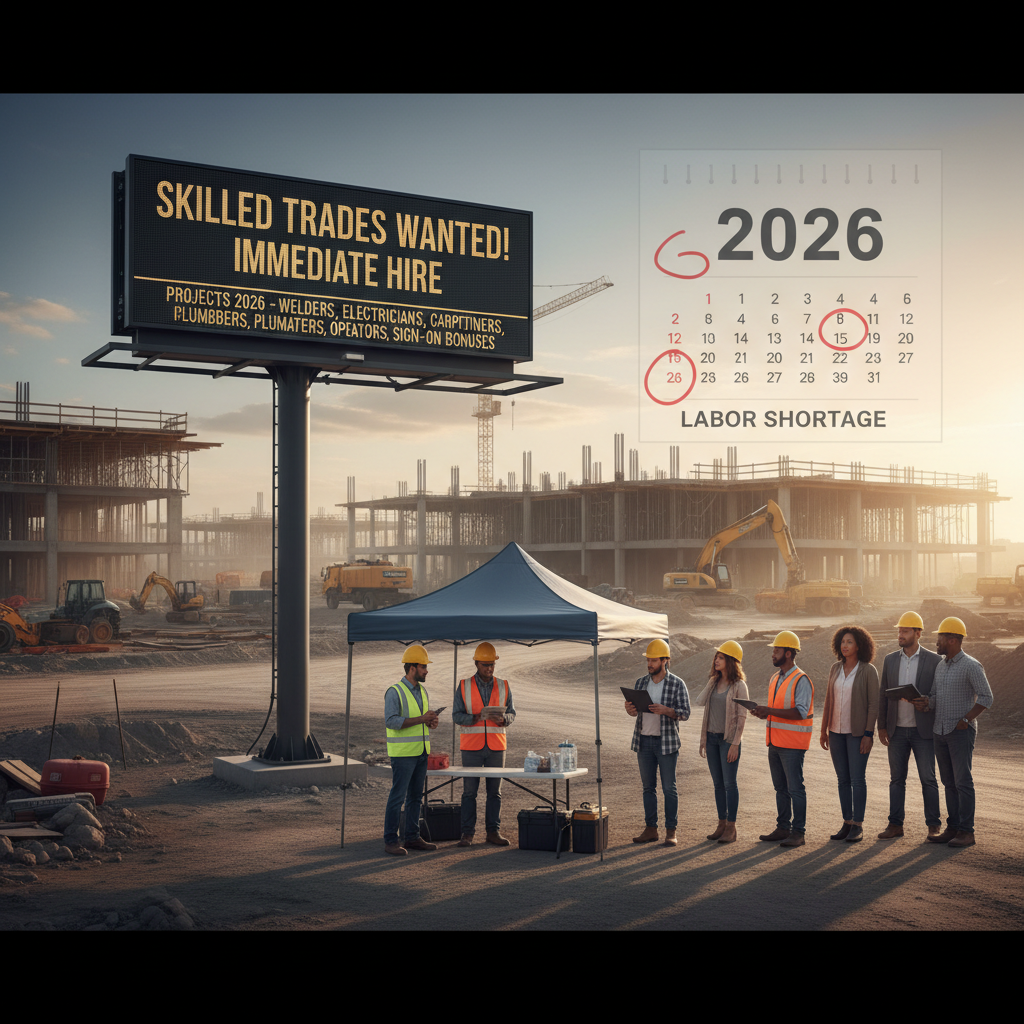
Construction Labor Shortage: How to Find Reliable Crews in 2026
The construction industry has faced a persistent labor shortage for over a decade, and it shows no signs of resolving. With demand for construction at record highs and fewer workers entering the trades, finding reliable labor crews is one of the biggest challenges facing general contractors and project managers today.
This guide covers the causes of the labor shortage and practical strategies for finding and retaining reliable construction crews.
The State of the Construction Labor Shortage
By the Numbers
- 80%+ of construction firms report difficulty finding qualified workers
- 500,000+ open construction positions nationally at any given time
- Average age of construction workers: 42 (and rising)
- 40% of construction workers are expected to retire by 2030
- Only 3% of young adults (18-25) are interested in construction careers
Root Causes
- Aging workforce: Older workers retiring faster than new workers entering
- Lack of vocational training: Schools have pushed college over trades for decades
- Immigration policy changes: Reduced flow of skilled labor from abroad
- Competition from other industries: Warehousing, delivery, and tech pay competitively with less physical demands
- Perception issues: Construction seen as physically demanding and less prestigious
- Economic cycles: Boom-and-bust cycles drive workers to more stable industries
Impact on Projects
- Schedule delays: Not enough workers means slower progress
- Higher labor costs: Scarcity drives up wages and project costs
- Quality issues: Less experienced workers may produce lower quality work
- Increased safety risks: Inexperienced crews have higher accident rates
- Scope reductions: Projects scaled back due to labor availability
Strategies for Finding Reliable Crews
1. Partner with Labor Staffing Companies
Benefits:
- Access to pre-vetted, skilled workers
- Flexible scaling (add/remove workers as needed)
- Reduced administrative burden (payroll, benefits, workers' comp)
- Faster mobilization
- Backup if your regular crews are unavailable
What to Look For in a Staffing Partner:
- Proven track record with similar project types
- Rigorous vetting and skills testing
- Proper licensing and insurance
- Safety training programs
- Competitive wage rates
- Rapid response capability
- Replacement guarantee (if a worker doesn't work out)
2. Build Direct Relationships with Trade Schools
Partnership Strategies:
- Offer apprenticeships and internships
- Guest lecture at trade programs
- Donate tools and materials to training programs
- Serve on advisory boards
- Host site tours for students
- Offer job shadowing opportunities
Benefits:
- First access to graduating students
- Build pipeline of young, motivated workers
- Shape curriculum to meet your needs
- Build reputation as an employer of choice
3. Develop an In-House Labor Force
Investment Required:
- Competitive wages and benefits
- Training and apprenticeship programs
- Career advancement pathways
- Safety equipment and training
Long-Term Benefits:
- Loyal, dedicated workforce
- Consistent quality and safety culture
- No dependence on external staffing
- Brand building as an employer
4. Leverage Technology for Recruitment
Digital Recruiting Strategies:
- Job postings on construction-specific job boards
- Social media recruitment (especially for younger workers)
- Video content showcasing company culture
- Employee referral programs with bonuses
- Online application and screening process
- Text-based recruiting (workers prefer text over email)
5. Improve Working Conditions
Workers choose employers who offer:
- Competitive pay: Match or exceed market rates
- Benefits: Health insurance, retirement plans, paid time off
- Safe work environment: Investment in safety equipment and training
- Respectful treatment: Professional, not exploitative
- Predictable schedules: Workers value schedule reliability
- Career growth: Clear advancement opportunities
- Quality tools and equipment: Nothing frustrates workers like bad tools
Vetting Crew Reliability
Key Questions to Ask
- How long has the crew been working together?
- What projects have they completed similar to mine?
- Can they provide references from recent projects?
- What is their safety record (EMR, OSHA logs)?
- Are they properly licensed and insured?
- What is their typical crew size and composition?
- What is their average project completion rate?
- How do they handle unexpected issues or changes?
Red Flags to Watch For
- Unwillingness to provide references
- Pressure to start without contracts or insurance verification
- Vague or evasive answers about experience
- No physical business address
- Requests for large upfront payments
- Poor communication during the bidding process
- No safety program or certifications
Verification Steps
- Check licenses with state licensing boards
- Verify insurance directly with the insurance carrier
- Call references and ask specific questions about performance
- Visit completed projects if possible
- Check online reviews and complaint history
- Verify workers' comp coverage for all crew members
- Review safety records and OSHA compliance
Retaining Reliable Crews
1. Pay Promptly
Nothing damages relationships faster than slow payment. Pay on time, every time. If there's a delay, communicate proactively.
2. Provide Clear Scope and Expectations
Crews perform best when they know exactly what's expected. Provide:
- Detailed scope of work
- Clear drawings and specifications
- Material lists and procurement support
- Quality standards and acceptance criteria
- Schedule expectations
3. Communicate Regularly
- Weekly check-ins during active projects
- Immediate communication of changes
- Open door for questions and concerns
- Recognition for good work
4. Provide Growth Opportunities
- Increasing responsibility on larger projects
- Training and certification support
- Path to crew lead or superintendent
- Long-term partnership agreements
5. Build Long-Term Partnerships
Rather than treating each project as a one-off transaction, build long-term relationships with reliable crews. Benefits include:
- Priority scheduling
- Better pricing (loyalty discount)
- Consistent quality (they know your standards)
- Reduced vetting time
- Mutual trust and respect
Alternative Labor Solutions
1. Cross-Trained Multi-Trade Crews
Rather than hiring separate crews for each trade, use crews cross-trained in multiple skills. Benefits:
- Fewer coordination challenges
- Faster problem-solving on-site
- Reduced mobilization costs
- More flexible scheduling
2. Modular and Prefabrication
Reduce on-site labor needs by using prefab components:
- Wall panels built off-site
- Modular bathroom pods
- Pre-assembled MEP racks
- Factory-finished cabinetry
3. Technology and Automation
- Drones for site surveying (reduces labor for site work)
- 3D printing for certain components
- Robotic bricklaying and concrete pouring
- BIM (Building Information Modeling) for clash detection
- Project management software for efficiency
Conclusion
The construction labor shortage is a long-term challenge that requires strategic thinking. By partnering with labor staffing companies, building relationships with trade schools, investing in in-house training, improving working conditions, and leveraging technology, you can build a reliable labor pipeline that keeps your projects on schedule.
Auxi Services provides vetted, skilled labor crews for general contractors—available on-demand, fully insured, and ready to deploy. Contact us for labor support.