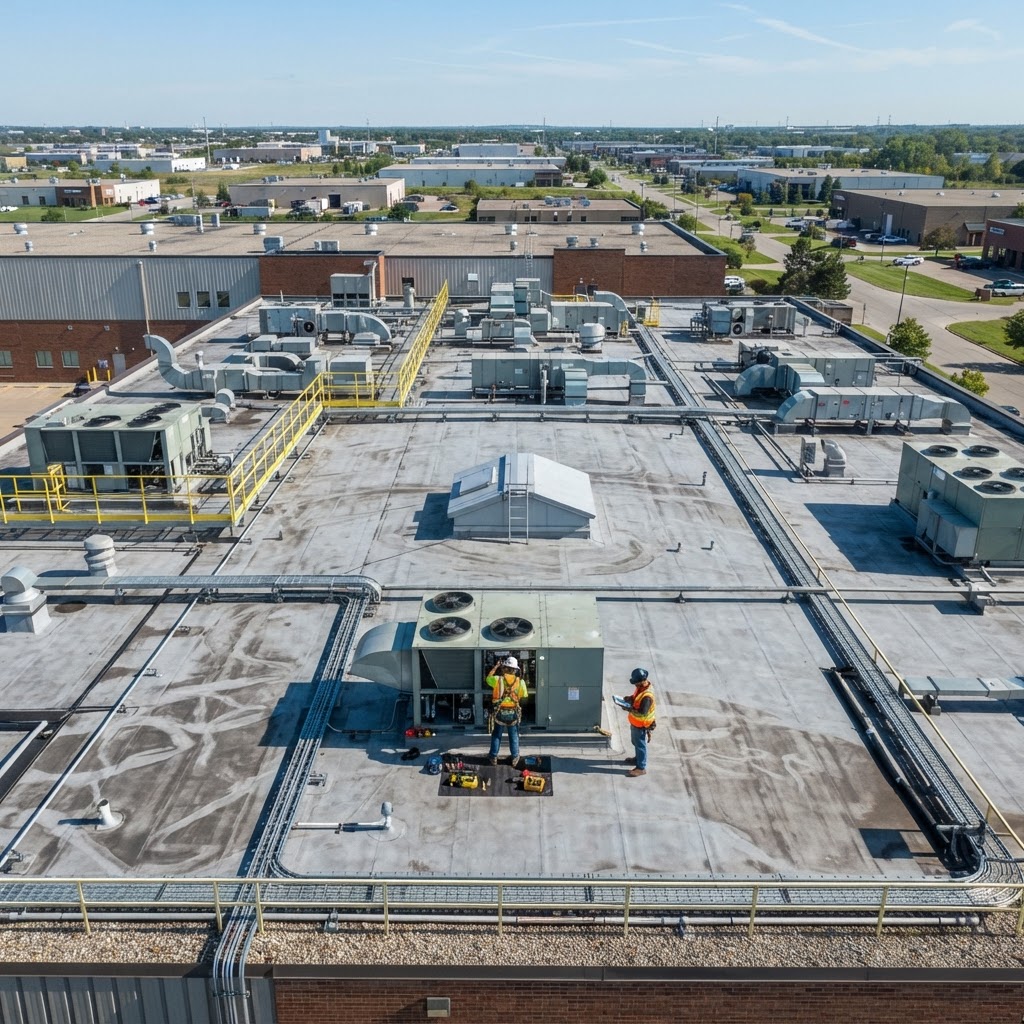
Commercial Roof Maintenance Guide: Extending Roof Lifespan
A commercial roof is one of the most expensive building components to replace, with costs ranging from $5 to $15 per square foot depending on the system. Proper maintenance can extend roof life by 5 to 10 years and prevent interior damage that costs even more. This guide covers the maintenance schedule every property manager should follow.
Why Commercial Roof Maintenance Matters
Cost Avoidance
- A new commercial roof costs $50,000 to $500,000+ depending on building size
- Extending roof life by 5 years saves tens of thousands in deferred replacement
- A single roof leak can cause $10,000 to $50,000 in interior damage
- Mold remediation from roof leaks costs $2 to $10 per square foot
Warranty Compliance
Most commercial roofing warranties require documented annual inspections and maintenance. Failing to maintain the roof can void the warranty, leaving you responsible for the full replacement cost.
Energy Efficiency
A well-maintained roof with proper reflectivity and insulation reduces cooling costs by 10 to 30 percent. Dirty, damaged, or waterlogged roofing materials lose their reflective properties.
Types of Commercial Roofing Systems
Flat Roofs (Most Common)
- TPO (Thermoplastic Olefin): 15-25 year lifespan, popular for energy efficiency
- EPDM (Rubber): 20-30 year lifespan, durable and cost-effective
- Modified Bitumen: 15-20 year lifespan, multi-ply system
- Built-Up Roofing (BUR): 20-30 year lifespan, traditional tar and gravel
Sloped Roofs
- Metal: 30-50+ year lifespan, durable and fire-resistant
- Tile: 50+ year lifespan, expensive but very durable
- Shingle: 20-30 year lifespan, less common on commercial buildings
Annual Maintenance Schedule
Spring Inspection
After winter, inspect for:
- Damage from ice, snow, and freezing
- Loose or lifted flashing
- Membrane damage from thermal cycling
- Clogged drains and scuppers
- Animal or pest damage
Summer Maintenance
- Clean all drains, scuppers, and gutters
- Remove debris and vegetation
- Check for ponding water areas
- Inspect AC unit support pads and penetrations
- Check for membrane blisters or bubbles
Fall Inspection
Before winter:
- Clear all debris (leaves, branches, trash)
- Clean gutters and downspouts
- Verify all drains are flowing freely
- Check flashing around all penetrations
- Document any areas needing repair before winter
Winter Monitoring
- Monitor for ice dam formation
- Check for snow accumulation loads
- Inspect for active leaks after storms
- Keep drains clear of ice and debris
What Professional Inspection Includes
A professional commercial roof inspection should cover:
- Full membrane condition assessment
- Flashing inspection around all penetrations (AC units, vents, skylights, pipes)
- Drain and scupper inspection and flow testing
- Seam inspection and testing
- Adhesion testing for membrane and flashing
- Moisture scan (infrared) to detect hidden water intrusion
- Structural deck inspection (if accessible)
- Documentation with photos and condition report
- Budget estimates for any needed repairs
Common Commercial Roof Problems
Ponding Water
Water that does not drain within 48 hours after rain. Causes include clogged drains, inadequate slope, or structural settling. Ponding water degrades roofing materials and adds weight to the structure.
Membrane Blisters and Bubbles
Caused by trapped moisture or air under the membrane. Small blisters can be monitored, but large or growing ones need professional repair to prevent membrane failure.
Flashing Failures
Flashing around penetrations (pipes, AC units, skylights) is the most common leak source. Metal flashing corrodes, membrane flashing cracks, and sealants degrade over time.
Puncture and Tear Damage
Foot traffic, dropped tools, AC maintenance, and debris cause punctures. Limit roof access and use walk pads in high-traffic areas.
Seam Separation
Membrane seams can separate due to thermal movement, poor initial installation, or age. Regular seam inspection and proactive repair prevents leaks.
DIY vs Professional Maintenance
Property staff can handle:
- Visual debris removal
- Gutter and drain clearing
- Basic photo documentation
Professional roofers should handle:
- All membrane repairs
- Flashing repair and replacement
- Seam inspection and repair
- Infrared moisture scanning
- Warranty-compliant inspections
- Any work on roofs over 15 years old
The ROI of Roof Maintenance
Annual commercial roof maintenance costs $0.05 to $0.15 per square foot ($500 to $1,500 for a 10,000 sq ft roof). Compare that to:
- Roof replacement: $5 to $15 per square foot
- Interior water damage repair: $10,000 to $50,000 per leak
- Mold remediation: $2 to $10 per square foot
- Business interruption from leaks: variable but potentially enormous
Every dollar spent on maintenance saves $5 to $10 in deferred replacement and damage repair costs.