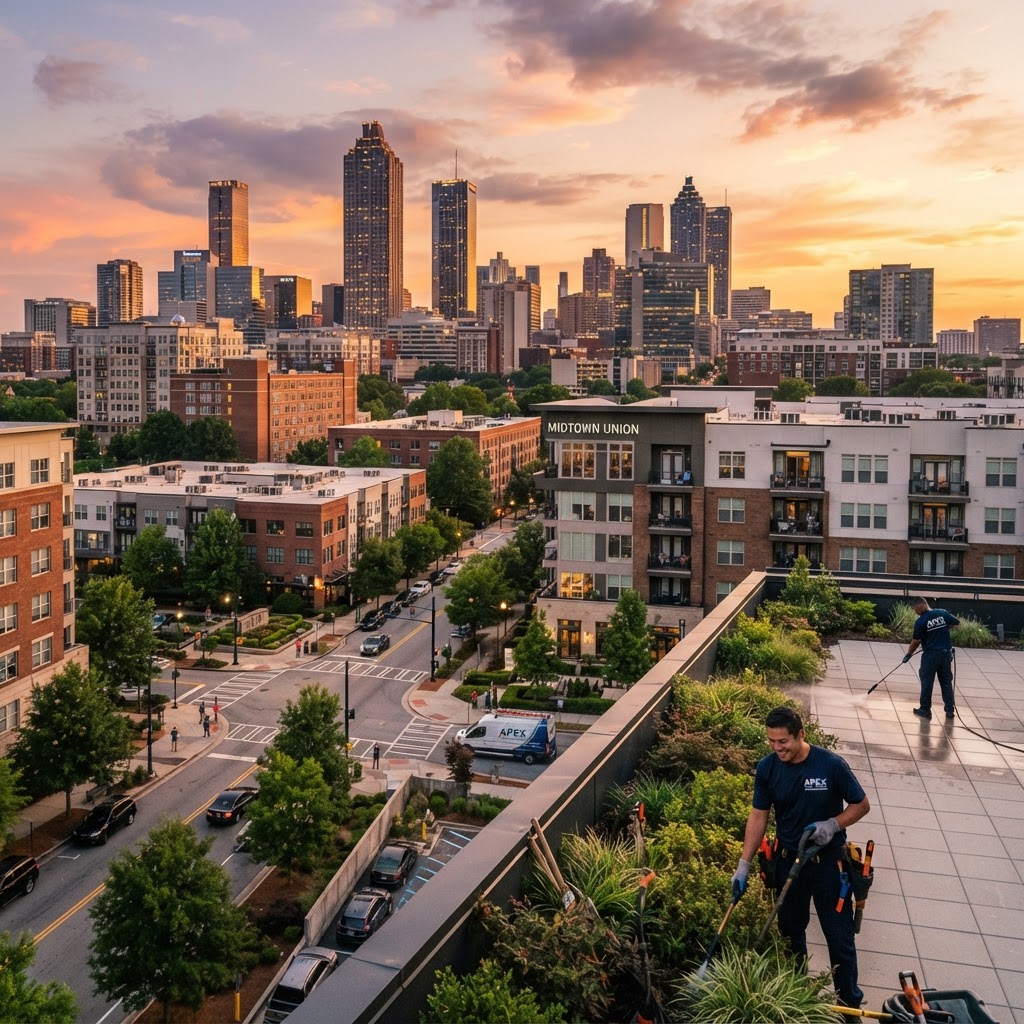
Atlanta Property Maintenance: What Property Managers Need to Know
Atlanta is one of the largest commercial real estate markets in the Southeast, with a diverse property stock ranging from downtown high-rises to sprawling suburban office parks and multifamily communities. The city's climate, geography, and growth patterns create specific maintenance priorities that property managers must address.
Atlanta's Climate and Maintenance Impact
Hot, Humid Summers
Atlanta summers are long, hot, and humid, running from May through September. This puts extreme stress on HVAC systems and creates conditions for mold, mildew, and pest problems.
Maintenance priorities:
- HVAC systems must be properly sized and maintained for continuous summer operation
- Crawl spaces and basements need vapor barriers and dehumidification
- Building envelopes need proper sealing to prevent moisture intrusion
- Exterior paint and coatings degrade faster in Atlanta's UV and humidity
Heavy Tree Canopy
Atlanta is known as the City in a Forest, with one of the densest urban tree canopies in the US. While beautiful, this creates maintenance challenges:
- Gutters fill with leaves, pine needles, and pollen repeatedly
- Tree roots invade underground pipes and foundations
- Falling branches damage roofs during storms
- Shaded areas promote moss and algae growth on roofs and siding
Severe Weather
Atlanta experiences:
- Severe thunderstorms and tornadoes (spring)
- Ice storms (winter) that cause power outages and tree damage
- Occasional tropical storm remnants (late summer/fall)
- Flooding in low-lying areas
Top Maintenance Priorities for Atlanta Properties
HVAC Systems
Atlanta's cooling season is 5 to 6 months long. HVAC maintenance is not optional, it is essential. Properties without preventive maintenance will experience failures during the first heat wave, when contractors are booked weeks out.
Roof Maintenance
Atlanta's combination of intense sun, heavy rain, and tree debris causes roof wear faster than in milder climates. Annual inspections are critical, especially for properties under tree canopy.
Drainage and Erosion Control
Atlanta's hilly topography and red clay soil create drainage challenges. Improper grading and clogged drains lead to foundation problems, basement flooding, and erosion. Properties need:
- Functioning gutters and downspouts
- Proper grading away from foundations
- Retaining wall inspection and maintenance
- Storm drain clearing
Pest Control
Atlanta's warm, humid climate is ideal for pests. Property managers need year-round pest control programs covering:
- Termites (major issue in the Southeast)
- Roaches and ants
- Rodents
- Mosquitoes
- Wildlife (squirrels, raccoons in attics)
Landscape Management
Atlanta properties need regular landscape maintenance to manage the aggressive plant growth. This includes:
- Monthly lawn care during growing season
- Quarterly tree and shrub pruning
- Pine straw or mulch refresh
- Invasive plant control
Atlanta Market Considerations
Vendor Availability
Atlanta has a large contractor base, but quality vendors are in high demand. Property managers should establish vendor relationships before they need emergency service.
Code and Permit Requirements
- Atlanta building code follows the International Building Code with Georgia amendments
- Permits are required for most electrical, plumbing, and structural work
- Short-term rental regulations may affect maintenance scheduling
- Tree removal requires permits in many Atlanta jurisdictions
Cost Considerations
Atlanta maintenance costs are moderate compared to other major cities, but rising labor costs and construction demand are pushing prices up. Property managers should budget 1 to 2 percent of property value annually for maintenance.
Atlanta Seasonal Calendar
- Spring: HVAC tune-up, roof inspection, gutter cleaning, pest treatment
- Summer: Filter changes, mold inspection, landscape maintenance, storm prep
- Fall: Gutter cleaning, furnace inspection, weatherization, tree trimming
- Winter: Pipe protection, ice dam monitoring, emergency preparedness