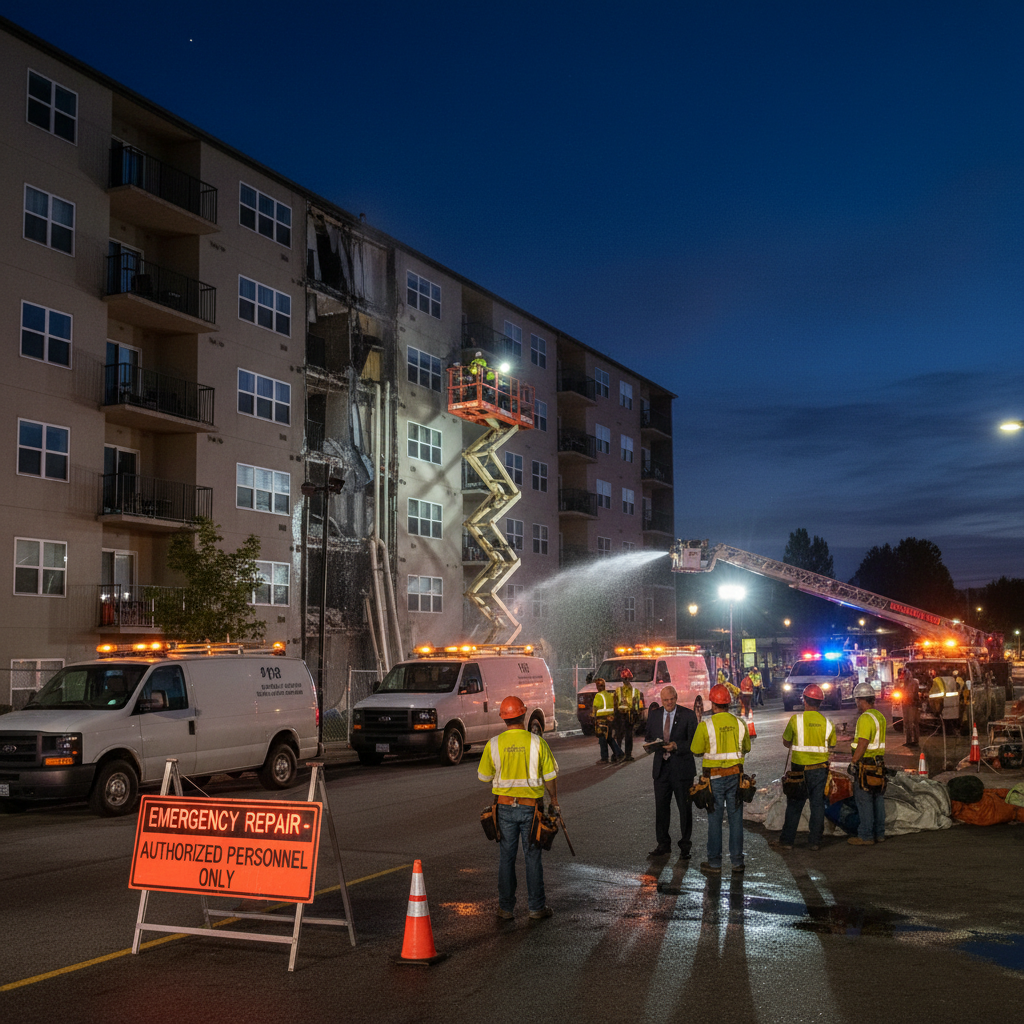
After-Hours Emergency Maintenance: Building a Response Protocol
Emergencies don't work business hours. A burst pipe at 2 AM, an HVAC failure during a heatwave, or a security breach on a holiday—these are the moments that test a property management operation. How you respond in the first hour can mean the difference between a minor incident and a major disaster.
This guide covers how to build an after-hours emergency maintenance response protocol that protects your property, your tenants, and your reputation.
What Constitutes an Emergency?
Defining Emergency Maintenance
Emergency maintenance is any situation that poses an immediate threat to:
- Life safety: Fire, gas leak, electrical hazard, structural failure
- Property: Water intrusion, flooding, sewage backup
- Habitability: No heat in winter, no AC in extreme heat, no water
- Security: Broken locks, broken windows, intrusion
Emergency vs. Urgent vs. Routine
| Category | Definition | Response Time | |---|---|---| | Emergency | Immediate threat to life, property, or habitability | 1-2 hours | | Urgent | Significant issue needing prompt attention but not life-threatening | 4-24 hours | | Routine | Standard maintenance request | 1-5 business days |
Examples by Category
Emergency:
- Burst pipe / major water leak
- Gas leak smell
- Electrical fire or sparking
- Sewage backup into living space
- No heat when outdoor temp is below 55°F
- No AC when outdoor temp is above 90°F (in required areas)
- Flood or water intrusion
- Structural damage (collapsing ceiling, etc.)
- Security breach (broken door, window)
Urgent (Non-Emergency):
- Single fixture leak (not flooding)
- One appliance not working
- Pest sighting (non-infestation)
- Broken garbage disposal
- Partial power outage
Routine:
- Dripping faucet
- Slow drain
- Squeaky door
- Paint touch-up
- Light bulb replacement
Building Your Emergency Response Protocol
Step 1: Establish Clear Procedures
Create written procedures for each type of emergency:
Water Leak / Burst Pipe Protocol:
- Identify and shut off water source
- Direct affected residents to safety
- Contact emergency plumber immediately
- Contact water extraction company
- Document damage with photos/video
- Notify property manager
- Communicate with affected residents
- Contact insurance company
- Begin drying within 24 hours (mold prevention)
HVAC Failure Protocol:
- Assess scope of failure (single unit or building-wide)
- Determine if emergency (temperature extreme)
- Contact HVAC contractor with emergency service
- Provide temporary comfort solutions (fans, space heaters if safe)
- Communicate expected resolution time to residents
- Document the failure and response
Gas Leak Protocol:
- Do NOT use any electrical switches or open flames
- Evacuate the building immediately
- Call gas company and 911 from outside the building
- Do not re-enter until cleared by gas company or fire department
- Notify property manager
- Document the incident
Fire Protocol:
- Activate fire alarm and evacuate
- Call 911
- Do not attempt to extinguish large fires
- Account for all residents
- Follow fire department instructions
- Do not re-enter until cleared by fire department
- Contact property manager and insurance company
- Document damage
Step 2: Maintain an Emergency Contact List
Keep an up-to-date contact list accessible 24/7:
Internal Contacts:
- Property manager (cell phone)
- Assistant property manager
- Maintenance supervisor
- On-call maintenance staff
- Property owner / ownership representative
Emergency Services:
- Fire department (911)
- Police department (911)
- Gas company emergency line
- Electric company emergency line
- Water utility emergency line
Contractors (24/7 Emergency Service):
- Plumber
- Electrician
- HVAC contractor
- Water damage restoration company
- Locksmith
- Board-up service (for broken windows/doors)
- Roofing contractor (emergency tarping)
- Security company
Other:
- Insurance company (claims line)
- Insurance agent
- Restoration company
Step 3: Establish On-Call Rotation
For properties with in-house maintenance staff:
- Rotate on-call duty among qualified staff
- Provide on-call compensation
- Establish clear expectations for response time
- Equip on-call staff with necessary tools and access
- Provide backup coverage for sick/vacation days
- Review on-call log weekly for patterns
Step 4: Create an After-Hours Intake System
How do tenants report after-hours emergencies?
Option 1: Dedicated Emergency Phone Line
- Separate number for emergencies only
- Forwarded to on-call staff or answering service
- Clear voicemail instructions for what constitutes an emergency
Option 2: Answering Service
- Professional answering service triages calls
- Non-emergencies held for business hours
- Emergencies dispatched to on-call staff immediately
- Cost: $200-$500/month typically
Option 3: Digital Reporting System
- Online portal or app for maintenance requests
- Emergency requests flagged automatically
- SMS/text alerts to on-call staff
- Photos can be attached for assessment
Step 5: Equip Your Response Team
On-Call Kit Contents:
- Basic tools (wrench, pliers, screwdrivers, multi-tool)
- Flashlight and headlamp
- Pipe wrench and plumbing supplies
- Electrical tester
- Key ring with master keys / access fobs
- Lockbox codes / access credentials
- Emergency contact list (laminated)
- Incident report forms
- Camera / phone for documentation
- First aid kit
- PPE (gloves, safety glasses, mask)
Step 6: Communicate with Tenants
Tenant Communication Protocol:
- Acknowledge the emergency report immediately
- Provide an estimated response time
- Communicate what to do while waiting (e.g., shut off water valve)
- Update on progress for ongoing emergencies
- Follow up after resolution to confirm satisfaction
- Document all communications
Tenant Education:
- Provide emergency procedures in move-in packet
- Post emergency contact information in common areas
- Send annual reminders of emergency procedures
- Educate tenants on what constitutes an emergency
- Train tenants on utility shut-off locations
Response Time Standards
Target Response Times
| Emergency Type | On-Site Response | Resolution Target | |---|---|---| | Water leak / flooding | 1-2 hours | 24 hours (stop) / Full repair 3-7 days | | Gas leak | Immediate evacuation, gas company response | Gas company determines safe re-entry | | HVAC failure (extreme temp) | 2-4 hours | Same day repair or temporary solution | | Electrical emergency | 1-2 hours | Same day repair | | Security breach | 1-2 hours | Immediate securing, same day repair | | Sewage backup | 1-2 hours | 24-48 hours | | Structural damage | 2-4 hours (assessment) | Varies by severity |
Documentation and Follow-Up
Incident Documentation
For every after-hours emergency, document:
- Date and time of initial report
- Who reported the emergency
- Nature of the emergency
- Who responded and when they arrived
- Actions taken
- Contractors involved
- Materials used
- Timeline of resolution
- Photos of damage and repairs
- Communication with tenants
- Final resolution and any follow-up needed
Post-Incident Review
After every significant emergency:
- Review what happened and how it was handled
- Identify what went well and what didn't
- Update procedures as needed
- Follow up with affected tenants
- File insurance claims if applicable
- Schedule preventive maintenance if the emergency revealed a systemic issue
Cost Management
Typical After-Hours Emergency Costs
| Service | After-Hours Premium | |---|---| | Plumber | 50-100% surcharge | | Electrician | 50-100% surcharge | | HVAC contractor | 50-100% surcharge | | Water extraction | Emergency rates ($150-$300/hour) | | Locksmith | $100-$300 after-hours call | | Board-up service | $200-$500 emergency visit |
Insurance Considerations
- Review your property insurance policy annually
- Understand what's covered and what's not
- Keep documentation of all emergency responses
- File claims promptly for significant damage
- Maintain a deductible fund for emergencies
Conclusion
After-hours emergency maintenance is about preparation. When you have clear procedures, reliable contractor relationships, a well-equipped response team, and effective tenant communication, emergencies become manageable incidents rather than crises. The investment in preparation pays off every time an emergency is resolved quickly and professionally.
Auxi Services provides 24/7 emergency maintenance response for commercial and multifamily properties. Contact us to set up your emergency response plan.